How Long Do Tires Actually Last? Real-World Mileage vs. the Warranty Sticker
The warranty number on the sticker is rarely the mileage you should plan around. Independent testing across dozens of popular tire models reveals gaps large enough to completely alter replacement budgeting: tires warranted for 75,000 miles often average 55,000 in real-world driving, while some 90,000-mile claims wear out near 60,000 miles. Conversely, select premium options like Michelin routinely meet or beat their stated warranties.
The honest answer to "how long do tires last" depends heavily on tire construction, category, and daily driving conditions. The mileage printed on the label represents a controlled manufacturer benchmark rather than an absolute guarantee. This breakdown outlines what independent test data shows, why the gap exists, and how to maximize the lifespan of your set.
Why Warranty Mileage and Real-World Mileage Diverge
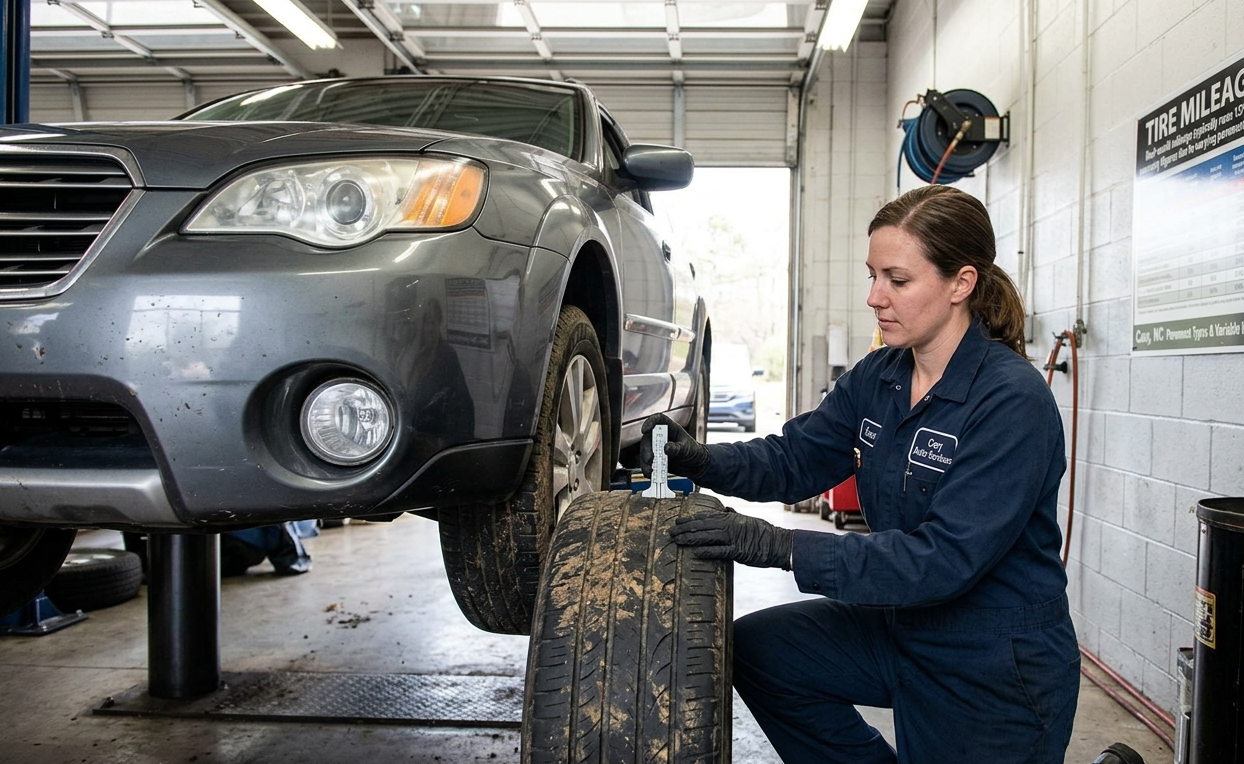
Tire manufacturers calculate warranty mileage using standardized test tracks with controlled speeds, smooth surfaces, and fixed vehicle weights — conditions that bear little resemblance to daily driving. A test track doesn't include pothole-filled city streets, extreme summer heat, steep mountain grades, or heavy cargo loads.
Treadwear warranties utilize standardized government test methodology (the same system driving UTQG ratings). While this creates a consistent baseline for comparing tire models against one another, it is not a direct prediction of how long rubber will last on your specific vehicle and roads.
Real-World Mileage Expectations by Tire Category
| Tire Category | Typical Real-World Lifespan | Key Maintenance Requirements |
|---|---|---|
| Premium Grand Touring All-Season | 65,000–95,000 miles | Requires strict 5,000–7,500 mile rotation intervals and proper inflation. |
| Standard All-Season / Commuter | 50,000–70,000 miles | The average benchmark for daily passenger vehicles. |
| Factory OEM Tires | 25,000–40,000 miles | Often constructed with shallower starting tread to reduce weight and roll resistance for fuel economy. |
| All-Terrain / Off-Road Truck | 40,000–50,000 miles | Gravel abrasion and vehicle payload accelerate tread wear. |
| Ultra-High Performance (UHP) Summer | 15,000–30,000 miles | Soft rubber compounds trade longevity for maximum cornering and braking grip. |
| Winter / Snow Tires | 20,000–40,000 miles | Accelerated wear when operated above 45°F; limited by rubber age as much as mileage. |
The Original Equipment (OEM) Reality:
The tires delivered on a brand-new vehicle rarely match the exact tread compound or starting depth of the same-named tire bought at retail. Automakers request specific tweaks for weight reduction and fuel efficiency, resulting in factory tires wearing out faster than aftermarket replacements.
The Factor Low-Mileage Drivers Underestimate: Chemical Age
Assuming low annual mileage keeps tires safe indefinitely is a dangerous misconception. Rubber degrades through two independent mechanisms: mechanical friction against the road, and chemical oxidation caused by UV light, atmospheric ozone, and heat cycles over time. A stored car with 5,000 miles on eight-year-old tires can present greater blowout risks than a daily commuter with 50,000 miles on three-year-old tires.
Tire manufacturers recommend professional annual inspections once a tire reaches 5 years from its manufacturing date, and complete replacement at 10 years regardless of remaining tread depth.
How to Decode Your Tire's Manufacture Date
Locate the DOT serial string stamped on the lower sidewall. The final four digits reveal the week and year of manufacture. For example, a code ending in 2425 indicates the tire was produced during the 24th week of 2025. Replace tires whose date codes exceed 6 to 10 years even if the tread appears deep.
Controllable Factors That Extend Tire Lifespan
Two identical vehicles running the same tire models can experience vast differences in wear rates based on routine care and driving environment:
- Consistent Rotation: Uneven wear from delayed rotations is the leading cause of early tire removal. Rotating every 5,000 to 7,500 miles ensures even distribution across drive and steer axles.
- Cold Pressure Checks: Underinflation concentrates loads on outer shoulders, while overinflation wears out the tread center. Inflate based on the driver's door jamb sticker, not the maximum pressure printed on the tire sidewall.
- Wheel Alignment: Suspension misalignment drags tires sideways across the road, destroying inner or outer shoulders in as little as 10,000 miles.
- Payload & Vehicle Mass: Heavy vehicles, towing loads, and electric vehicle torque place greater shearing forces on tread compounds, accelerating physical wear.
- Garage Storage: Protecting rubber from direct sunlight and ambient heat retards oxidation and prevents compound dry rot.
Bottom Line
Plan on 15%–25% Less Than the Warranty: A tire with a 60,000-mile warranty realistically delivers 45,000–50,000 miles of safe performance in mixed daily driving.
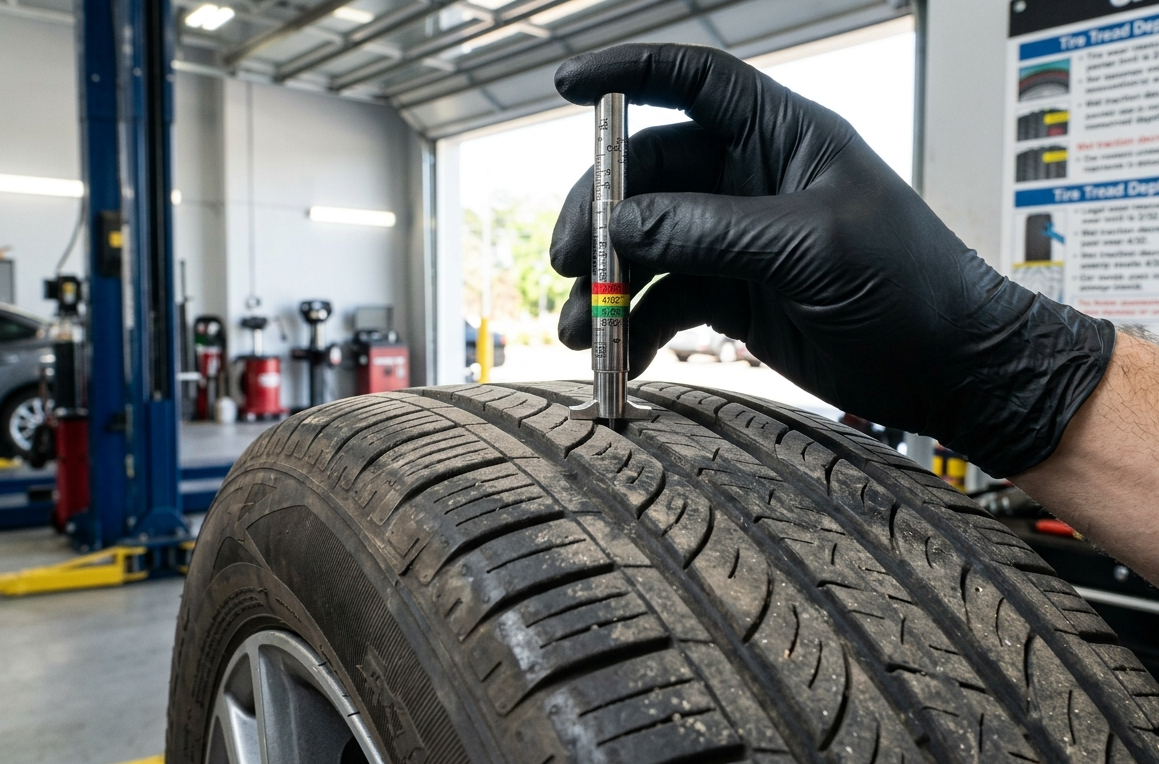
Monitor Both Tread and Time: Replace tires when tread depth reaches 2/32" (or 4/32" for wet weather confidence), or when age passes 6–10 years from the DOT manufacture stamp.