Do EV tires increase range? Sometimes, but the "EV" on the sidewall is a poor predictor. In the three multi-tire tests below, the least efficient tire on a given car used 11% to 19% more energy than the most efficient one, and tires sold as EV tires finished at both the top and the bottom. Whether that gap matters to you depends mostly on what you are replacing.
Read these numbers as direction, not a promise: The tests come from two organizations, Tire Rack in the US and Auto Bild in Germany (reported here through Tyre Reviews). They use different cars, tire sizes, and routes, so the figures cannot be stacked against each other. Some of the European-market tires may be sold under different names in the US.
Why Tire Choice Matters More on an EV
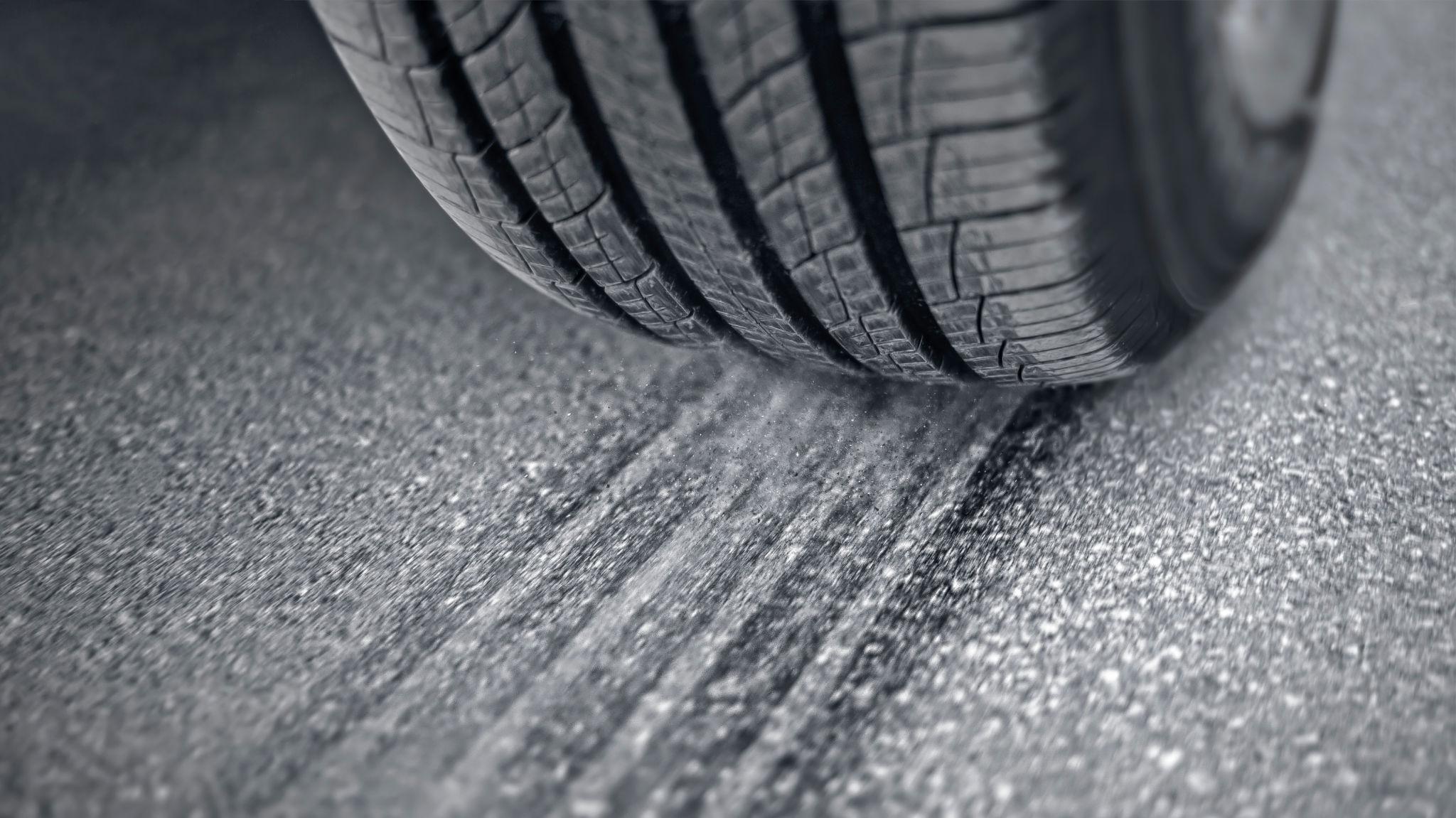
Rolling resistance is the energy a tire loses as it flexes under load. Michelin says that in an electric car this small loss "takes on a much more significant role" in overall efficiency. An EV wastes far less energy elsewhere, so there is less to mask it.
Tire Rack puts rough numbers on the difference. The industry rule of thumb for gas vehicles is that a 10% rise in rolling resistance costs 1% to 2% in fuel efficiency. For EVs, Tire Rack reports that a 10% drop in range has been observed after switching from worn tires to new ones of the same model, against a 2% to 4% drop in mpg for gas cars. Those are observations, not controlled measurements, but they explain why EV owners notice tire changes so quickly.
New Tires Can Cost You Range
Tire Rack says rolling resistance drops by about 20% as tread wears from its original molded depth to worn, and that moving to a new set raises it by a noticeable 20%. Michelin's EV guide says some studies find a worn tire is about 6% better for range than a new one. Between the two sources, expect a drop somewhere from about 6% to 10% right after a replacement with the same model.
If your range crept up as the tires wore and then fell when you replaced them, nothing is defective. Tire Rack also noted that a worn set overstated distance by about 1.5% on the odometer, which can make worn tires look slightly more efficient than they really are.
The Trade-off:
Running tires down to protect range costs you safety margin. Michelin's own guidance is that very worn tires are unsafe and that safety comes first. A few percent of range is a poor trade for longer stopping distances in the rain, so replace tires at the wear limit, not after it.
Do EV Tires Increase Range? What the Tests Measured
Tire Rack: factory tires vs. replacements on a Model 3
Tire Rack compared factory tires with replacements on two identical 2022 Tesla Model 3 Dual Motor Long Range cars, driven in tandem on a defined 200-mile highway route near its South Bend, Indiana headquarters. The estimated ranges are calculated from the car's reported consumption, and Tire Rack notes that "your range may vary."
| Tire | Role | Wh/mi | Estimated range |
|---|---|---|---|
| Michelin Primacy MXM4 T1 | Factory, 235/45R18 | 236 | 305 mi |
| Michelin CrossClimate2 | Replacement, 235/45R18 | 263 | 271 mi |
| Continental ProContact RX T1 | Factory, 235/40R19 | 274 | 262 mi |
| Continental PureContact LS | Replacement, 235/40R19 | 286 | 246 mi |
The Michelin pair is the stark one. The CrossClimate2 used about 11% more energy per mile and lost an estimated 34 miles of range. The Continental pair differed by about 4%, which Tire Rack described as "not by a significant amount." The replacements earned their keep elsewhere: wet braking from 50 mph was 15 to 23 feet shorter, and the CrossClimate2 adds the 3PMSF snowflake.
The takeaway is narrower than "factory tires always win." Neither replacement was an EV tire, so this test says little about whether an EV-specific replacement would have closed the gap.
Tire Rack: nine tires on a Model 3 Performance
Tire Rack's 2024 test put nine tires on a 2023 Model 3 Performance and recorded vehicle-reported Wh/mi. Tire Rack identifies five of them as EV-focused: the Hankook iON evo AS, Goodyear ElectricDrive 2, Yokohama ADVAN Sport EV A/S, Bridgestone Turanza EV, and the Pirelli P Zero (PZ4) in the "Elect" size with noise foam. The Goodyear EcoReady was the only tire tested in an 18-inch size (235/45R18); the rest were 235/40R19.
| Tire | Wh/mi | Vs. best | What Tire Rack flagged |
|---|---|---|---|
| Hankook iON evo AS | 263 | Best | EV-focused. Very efficient, but struggles in the wet. |
| Goodyear EcoReady | 269 | +2.3% | Not an EV tire. Best ice stopping distance in the test. |
| Continental ProContact RX (T1) | 272 | +3.4% | Not an EV tire. "A safe choice," with middling winter performance. |
| Goodyear ElectricDrive 2 | 274 | +4.2% | EV-focused. Matches the ProContact on efficiency, struggles in adverse weather. |
| Pirelli P Zero (PZ4), Elect | 274 | +4.2% | Summer tire, so warm weather only. |
| Yokohama ADVAN Sport EV A/S | 274 | +4.2% | EV-focused. Comfortable and winter-capable, with weak wet traction. |
| Bridgestone Turanza EV | 276 | +4.9% | EV-focused. Top snow performer in the test, but shares the wet-traction weakness. |
| Michelin Pilot Sport 4S | 290 | +10.3% | Best handling in the test, but "not the longest" for range. Summer only. |
| Michelin Pilot Sport All Season 4 | 292 | +11.0% | Not an EV tire. Outclassed in snow and longest ice stop (65 ft). |
Three things stand out. The EV-focused Hankook was the most efficient, but the Goodyear EcoReady, which Tire Rack describes by its ecological focus rather than as an EV tire, finished second, and the standard Continental ProContact RX finished third. Three EV-named tires then sat at 274 to 276 Wh/mi, within 2 to 4 Wh/mi of that Continental. And the two Michelins used about 10% more energy than the leader.
The Trade-off:
Each of the four all-season EV tires gave something up. The Hankook was weak in the wet, the Yokohama and Bridgestone shared a wet-traction weakness, and the ElectricDrive 2 struggled in adverse weather. The fifth, the Pirelli, is a summer tire. Check what an efficient tire gives up in the conditions you actually drive in before you buy it for range.
Auto Bild: eight tires on a Kia EV6
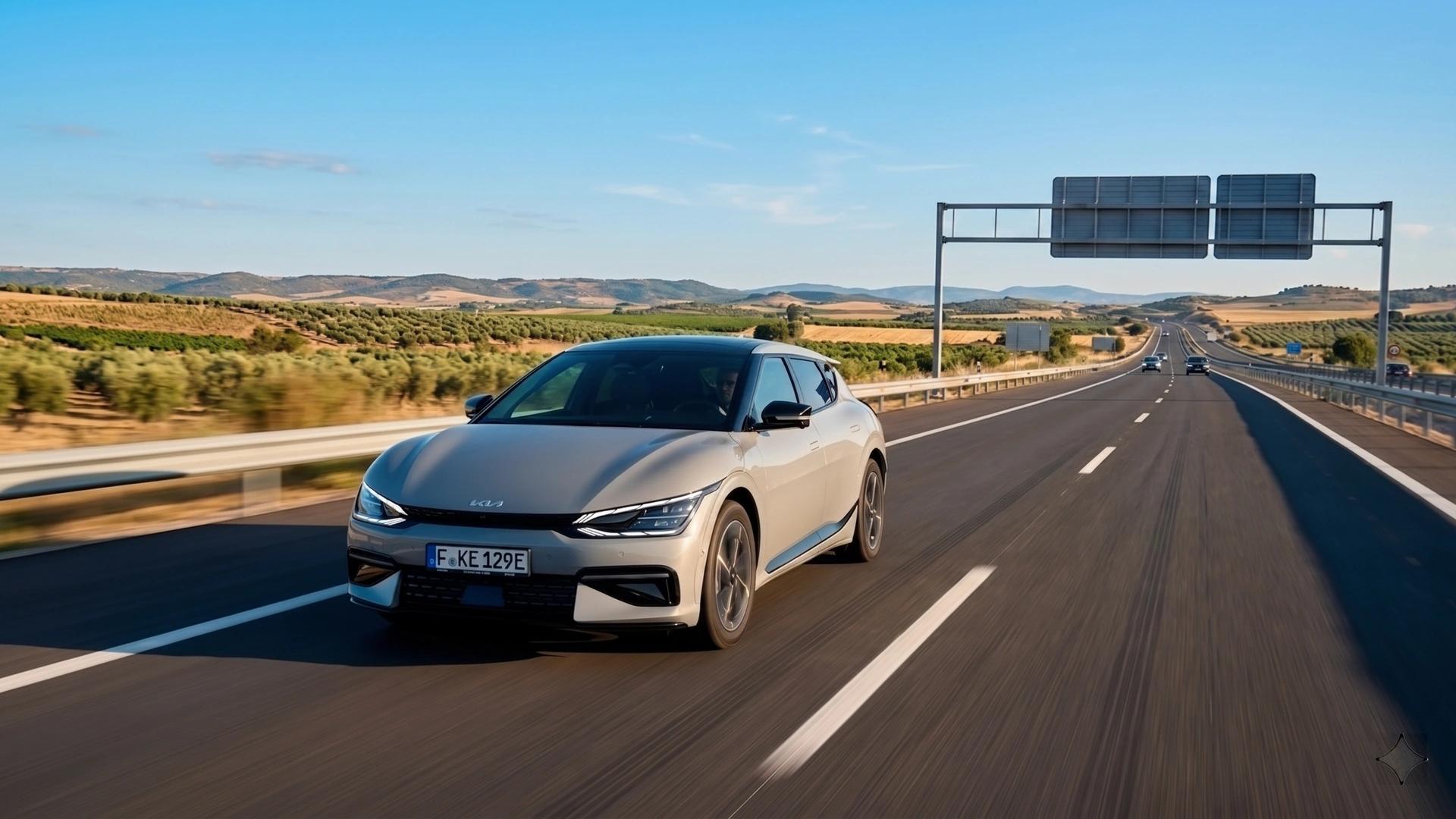
Auto Bild's 2024 test fitted eight 235/55R19 tires to a Kia EV6. Consumption ran from 18.28 kWh/100 km on the Falken e.Ziex to 20.82 on the GT Radial Sport Active 2 EV, a gap of 2.54 kWh/100 km, or 13.9%. Both are sold as EV tires. On a car that covers 300 miles on the best tire, that gap works out to about 263 miles on the worst, roughly 37 fewer.
The overall winner was the Michelin Pilot Sport 4 SUV, a standard tire, which ranked fourth for energy at 19.17 kWh/100 km, about 5% above the Falken. The Continental PremiumContact 7 was second for efficiency, about 1% above the Falken.
Auto Bild: eight tires on a Hyundai Kona EV
Auto Bild's 2025 test, reported by Tyre Reviews, used 215/55R18 summer tires on a Hyundai Kona EV. Only two of the eight were designed as EV tires, the Hankook iON evo and the Falken e.Ziex, and they delivered the two longest ranges: 410.0 km for the Falken and 381.3 km for the Hankook. The Hankook won overall.
The Continental PremiumContact 7 finished second overall but delivered the shortest range, 344.4 km. That is 65.6 km (about 41 miles) behind the Falken and 36.9 km (about 23 miles) behind the Hankook. Tyre Reviews concluded that the gap between dedicated EV tires and high-quality standard tires is minimal once safety and efficiency are balanced. The range column shows how much of that "minimal" gap is range.
Putting the Numbers in Context
The table compares the best and worst tire in each test, expressed as the extra energy the worst tire used.
| Test | Best | Worst | Worst used | EV-label result |
|---|---|---|---|---|
| Tire Rack, Model 3 (factory vs. replacement) | Factory tires | Replacement all-seasons | 4% and 11% more | No EV tires in the test |
| Tire Rack, Model 3 Performance | Hankook iON evo AS (EV), 263 Wh/mi | Michelin Pilot Sport All Season 4, 292 Wh/mi | 11.0% more | EV tire first, then two standard tires ahead of three EV-focused ones |
| Auto Bild, Kia EV6 | Falken e.Ziex (EV), 18.28 kWh/100 km | GT Radial Sport Active 2 EV (EV), 20.82 | 13.9% more | EV tires at both ends |
| Auto Bild, Hyundai Kona EV | Falken e.Ziex (EV), 410.0 km | Continental PremiumContact 7, 344.4 km | 19.0% more | EV tires took the top two ranges |
The label did better in the Kona test and worse in the EV6 test, which is the point. Among similar tires the spread is much smaller than the headline gaps. Seven of the nine Tire Rack tires fell within a 5% band (263 to 276 Wh/mi), about 14 miles on a car that goes 300 miles on the best of them. The swings of 10% and more came from the two performance-oriented Michelins and from the outliers in Auto Bild's fields.
When an EV Tire Makes Sense
You are coming off a performance tire
This is where the tests show the clearest gain. In Tire Rack's results, the two Michelins used about 10% to 11% more energy than the Hankook. In the EV6 test, the Bridgestone Potenza Sport used 13.0% more than the Falken and the Goodyear Eagle F1 Asymmetric 6 used 9.5% more. Moving to a grand touring or EV-focused tire can recover roughly 10%, and you give up grip for it. Tire Rack called the Pilot Sport 4S's steering "as close to driving perfection as one can expect."
You are replacing factory tires
Do not assume a replacement will match the factory tire. Tire Rack's replacements used 4% to 11% more energy than the factory tires they replaced, though they braked shorter in the wet. If range is the priority, look up how the specific replacement scored in an efficiency test. In the 2024 results, three of the four EV-focused all-seasons landed within about 1.5% of a standard Continental, so the label alone did not buy a clear edge.
You drive in the cold
Tire rolling resistance is theoretically higher at low temperatures, according to a Smithers study, and current test methods only cover ambient temperatures of 24 or 25 degrees C (about 75 to 77 F). That means no published rolling resistance rating tells you how a tire behaves in winter. Batteries are generally seen as the main limit on cold-weather range, so tires are a smaller piece of the problem. Where tires do matter is traction: in Tire Rack's test the Turanza EV was the top snow performer while the Pilot Sport All Season 4 was outclassed by most tires.
What the EV Label Does and Does Not Tell You
In the US, nothing on the sidewalk reports rolling resistance. The UTQG grades cover treadwear, traction, and temperature, and "EV" on a tire is a brand claim, not a graded result. The tests above show why that matters: EV-labeled tires finished first, in the middle, and last depending on the field.
Europe handles it differently. The EU tire label grades rolling resistance on a five-class scale, with A the lowest, under Regulation (EU) 2020/740, which took effect on May 1, 2021. That is the closest thing to a standardized number, and it is not printed on US-market tires.
Check Tire Pressure Before You Spend Money
Michelin states that every PSI below the recommended pressure increases rolling resistance and drains the battery, and recommends checking pressure monthly. Michelin does not put a number on the effect, and none of the tests above isolate it, so treat it as free maintenance rather than a range upgrade. Check the tires cold, against the placard on the driver's door jamb. It takes two minutes and costs nothing.
Bottom Line
EV tires can add range, but the evidence supports a narrower claim than the marketing does. On the same car, the best and worst tires in these tests were 11% to 19% apart, and a tire sold for EVs finished at both ends. Among similar all-seasons the spread shrinks to about 5%, or roughly 14 miles on a 300-mile car.
If you are replacing factory tires with an ordinary all-season, expect to lose a few percent of range and gain traction. If you are leaving a performance tire, a grand touring or EV-focused tire can recover about 10% at the cost of some grip. Either way, find the specific tire in an independent efficiency test, check what it gives up in the wet and in winter, and keep the pressure at the placard.