Do EV tires wear faster? On average, yes. Michelin puts the difference at about 20 percent compared with a comparable gas car, and J.D. Power's 2024 dependability study found that 39 percent of battery-electric owners had replaced tires in the previous year, against 20 percent of gas owners. The causes are mostly physical: a heavy battery, instant torque, and regenerative braking. This guide explains each one, how your drivetrain changes the picture, and what you can control.
Key Takeaway:
Michelin says EVs wear out tires about 20 percent faster than comparable gas cars on average, and Bridgestone says its research shows 30 to 40 percent. Weight, instant torque, and regenerative braking are the main reasons, which makes on-time rotation the easiest thing you can control.
The Evidence: How Much Faster, and From Whom
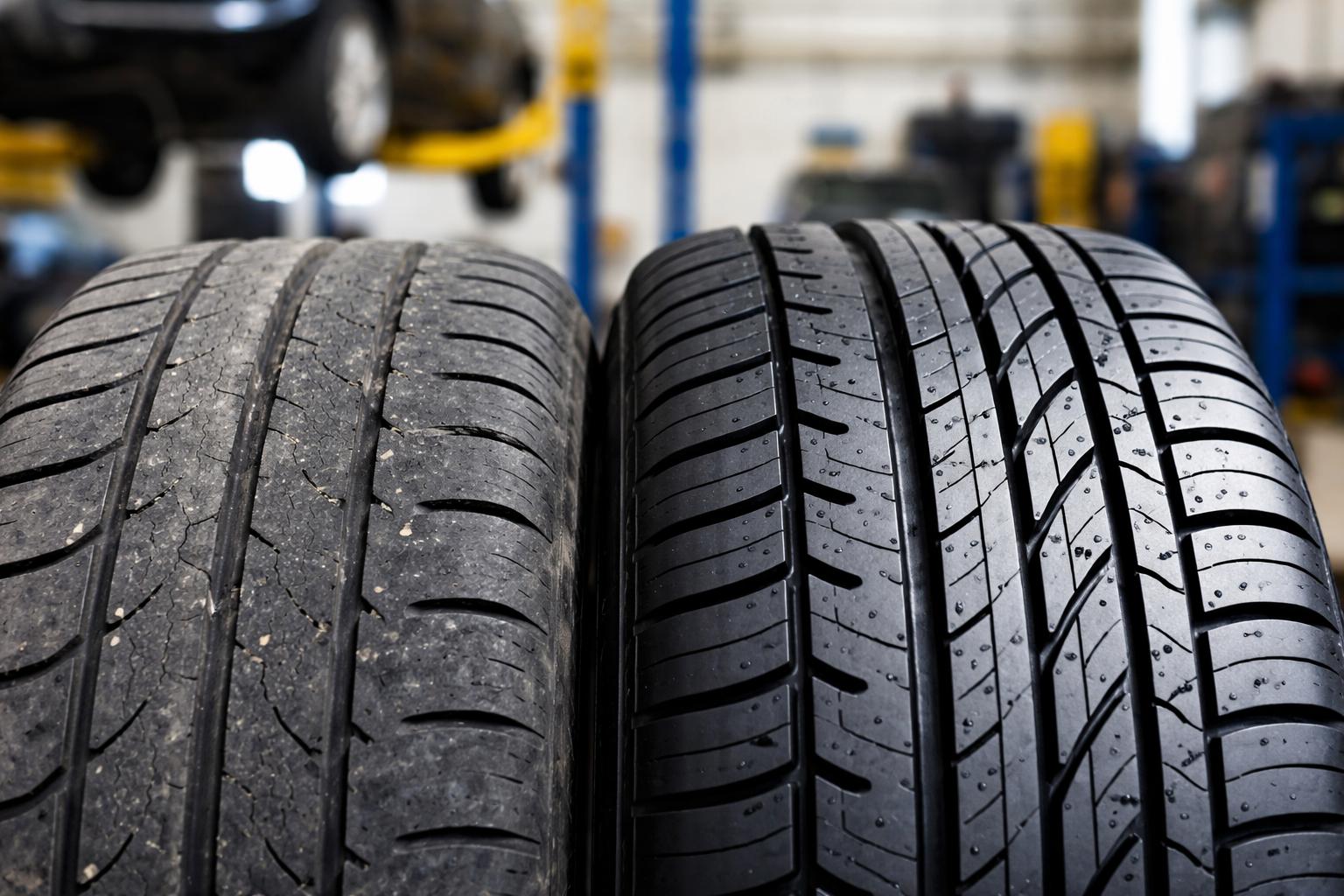
Michelin's EV FAQ says it plainly: "On average, EVs will wear out a tire 20% faster than a comparable ICE vehicle." Bridgestone's numbers are higher. Product manager Brad Robison told Electric & Hybrid Vehicle Technology in 2024 that "our research has shown that EVs can wear out tires 30 to 40 percent faster than ICE vehicles." J.D. Power's 2024 Vehicle Dependability Study found that 39% of battery-electric owners replaced tires in the previous 12 months, versus 20% of gas owners. A separate J.D. Power study of original-equipment tires, released in March 2024, scored EV tires lower for satisfaction (769 against 796 for gas vehicles on a 1,000-point scale), with owners reporting faster wear.
Owners who replaced tires in the previous 12 months
Source: J.D. Power 2024 U.S. Vehicle Dependability Study. This is an owner-survey finding, not proof that EV tires wear at a particular rate.
These figures are not identical, and none is a controlled head-to-head test. They come from manufacturers and owner surveys. Treat 20 percent as the typical difference, and read Bridgestone's 30 to 40 percent as what its research says can happen, not a number every EV will hit. The more useful question is why it happens, because the causes decide what you can do about it.
Why EVs Are Harder on Tires: Three Specific Causes
Extra weight
More load on the tire contact patch
Instant torque
More tread stress during acceleration
Regeneration
Drive-axle braking load can add wear
1. Weight
EVs are heavier than comparable gas cars, mostly because of the battery pack, which can weigh 1,000 pounds or more. That extra mass loads the tires harder in every corner, stop, and launch. Emissions Analytics, which measures tire wear emissions, found in one test that adding 30 percent to a car's mass raised tire wear by 21 percent. Across passenger cars, it reports roughly 3 percent more wear for each additional 100 kg (about 220 pounds). It also notes that EVs are not always the worst performers, because driving style, regenerative braking, and tire design all matter.
2. Instant Torque Delivery
Electric motors deliver their peak torque from zero RPM, with no revs to build and no gears to shift. Press the accelerator and the drive wheels get full power immediately. That feels responsive, but it puts high shear stress on the drive-axle tread blocks during launches.
3. Regenerative Braking Concentrates Wear
Regenerative braking slows the car with the electric motor, and the motor only turns the wheels it is connected to. On a rear-wheel-drive EV, the rear tires handle the acceleration torque and a share of the braking load too, while a gas car's friction brakes do most of their work at the front. The result is faster wear on the drive axle and uneven wear between axles.
Worth Noting About Worn Tires and Range:
Michelin says a worn tire is about 6 percent better for range than a new one, because less tread means less rolling resistance. That is why range can dip slightly after new tires go on. It is not a reason to run tires down past the wear indicators, since wet grip and hydroplaning resistance fall as the tread wears.
Does It Depend on Your EV's Drivetrain?
Yes. Your drivetrain decides which axle takes the most wear, and that decides how closely you need to watch it:
| Drivetrain | Which Tires Wear Fastest | Suggested Rotation Interval |
|---|---|---|
| Front-Wheel Drive (FWD) | Front tires (steering, acceleration, and regenerative braking) | Every 5,000 to 6,000 miles |
| Rear-Wheel Drive (RWD) | Rear tires (acceleration torque and regenerative braking) | Every 5,000 to 7,500 miles |
| All-Wheel Drive (AWD) | More balanced across axles, but the vehicle is heavier overall | Every 5,000 to 7,500 miles (do not skip) |
These intervals are our suggestions, so follow your owner's manual if it gives a shorter one. Dual-motor AWD EVs generally want all four tires close in tread depth, so rotate on schedule and replace tires in sets of four, or within the tread-depth difference your manual allows.
What You Can Actually Do About It
Rotate Tires Every 5,000 to 7,500 Miles
An oil-change-style schedule of 7,500 to 10,000 miles is too long for most EVs, and without oil change reminders a rotation is easy to forget. Set a calendar alert. Uneven wear raises rolling resistance, which costs range.
Maintain Cold Inflation Pressures
Many EVs call for higher pressures than a typical gas car, so go by the door-jamb placard and not a generic number. Underinflated tires wear their shoulders faster and cost range. Check pressures when the tires are cold.
Ease Into the Throttle
Smooth, progressive throttle input reduces the shear on the tread blocks during launches. Of the three causes above, this is the one you control most directly.