Are EV-Specific Tires Worth It? Engineering Reality vs. Marketing Hype
"EV tire" is a label that means different things on different products. On some tires, it signals genuinely specialized engineering—acoustic dampening foam, elevated load ratings, and rubber compounds tuned for low rolling resistance under battery weight. On others, it is little more than a marketing badge stamped on a standard touring tire.
The short answer: you do not always need an EV-labeled tire to drive an EV safely. However, there are critical load and performance scenarios where choosing the wrong specification carries a severe penalty.
1. Engineering vs. Marketing: The Real Physical Differences
Load Rating — The Only Non-Negotiable Spec
Electric vehicles are typically 20% to 30% heavier than equivalent internal combustion engine (ICE) cars due to battery packs averaging 1,000+ pounds. Because four tires support that entire mass, an underrated tire can overheat, flex excessively under cornering, or suffer structural carcass failure.
| Load Designation | Construction Type | Capacity relative to SL | Typical Application |
|---|---|---|---|
| SL (Standard Load) | Baseline passenger tire construction | Baseline (35–36 psi max) | Lightweight sedans, compact ICE cars |
| XL (Extra Load) | Reinforced internal carcass & bead | ~12% higher capacity | Tesla Model 3/Y, Hyundai IONIQ 5, VW ID.4 |
| HL (High Load) | ETRTO standard introduced in 2021 for heavy EVs | ~23% higher than SL (~11% > XL) | Rivian R1S/R1T, Model X, Audi Q8 e-tron |
Critical Safety Requirement: The HL Rule
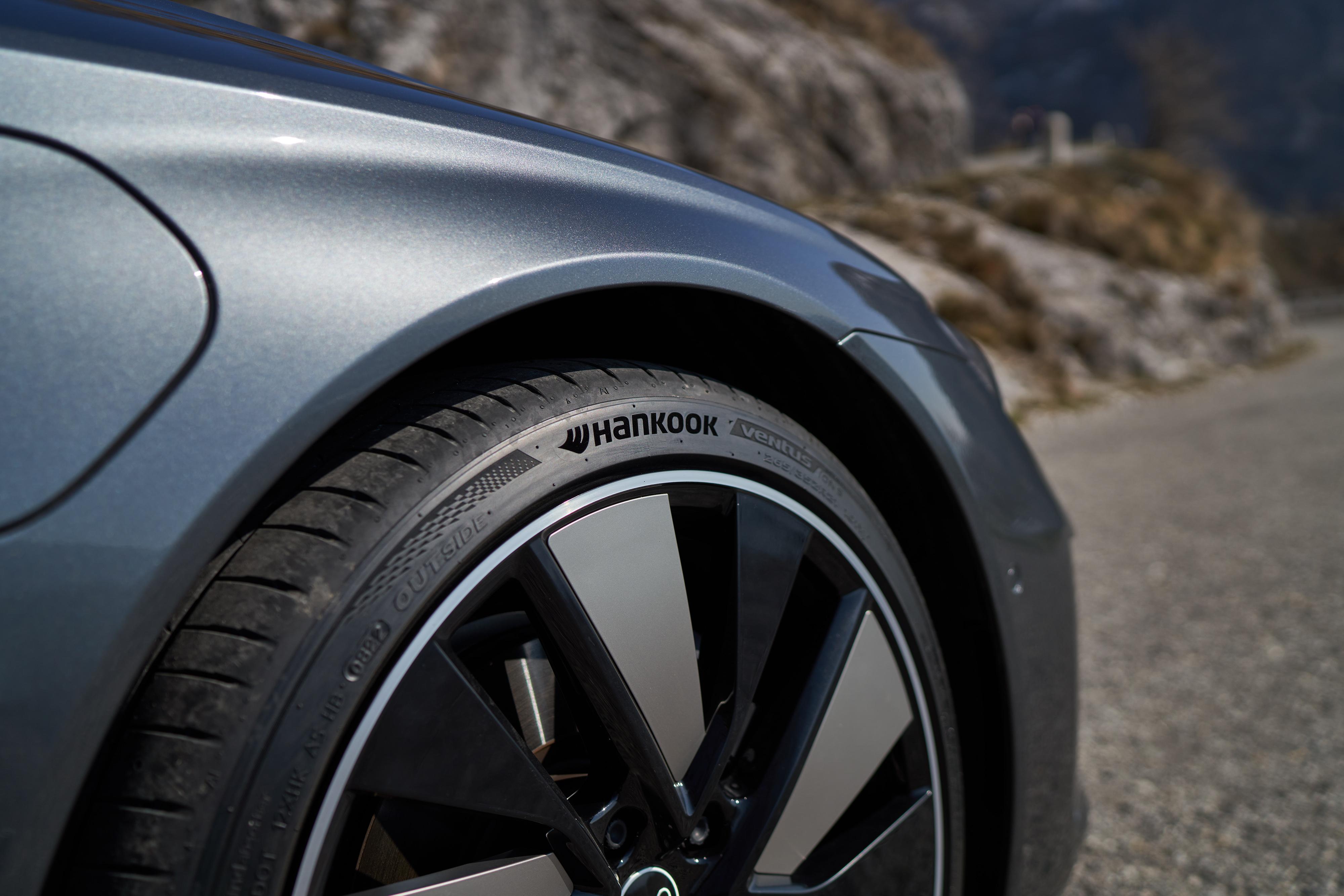
If your vehicle came with HL-rated tires from the factory, every replacement set must also carry the HL designation. Fitting an XL tire on a vehicle engineered for HL capacity forces the tire to operate beyond its safe design limits. Look for the HL prefix before the size on your sidewall (e.g., HL 245/40R21).
Acoustic Foam — Cavity Resonance Suppression
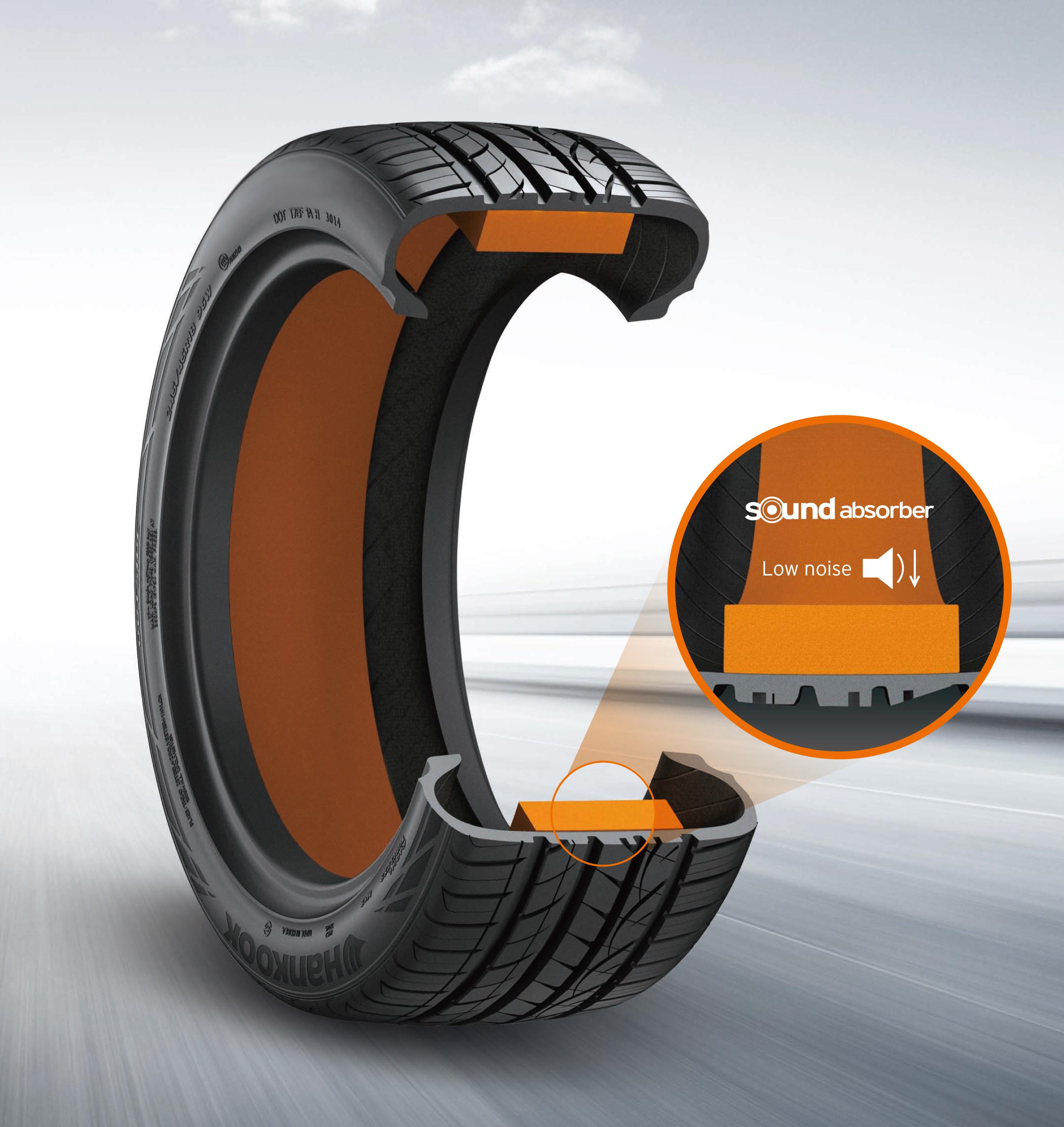
Without internal combustion noise to mask road sound, low-frequency air vibrations inside the tire cavity—known as cavity resonance (220–240 Hz)—become noticeable as a persistent highway hum. Acoustic foam technology uses a thick band of open-cell polyurethane bonded to the tire's inner liner to absorb these air oscillations.
Manufacturer Brand Names
- Michelin: MAT (Michelin Acoustic Technology)
- Bridgestone: B-Silent
- Pirelli: PNCS (Pirelli Noise Cancelling System)
- Continental: ContiSilent
- Nokian: SilentDrive
Key Practical Realities
- • Noise Impact: 3–9 dB reduction in the 220–240 Hz resonance band.
- • Puncture Repairs: Fully repairable under USTMA TISB 52 guidelines by paring back ~2 inches of foam.
- • No Tradeoffs: Does not alter load index, speed rating, or treadwear life.
Rolling Resistance Compounds & The Range Tradeoff
Low rolling resistance (LRR) compounds minimize energy loss as the tire deforms against the road surface, adding up to 10% in total driving range. However, tire engineering is a balance of trade-offs: ultra-low rolling resistance compounds use stiffer polymer matrices that can compromise wet-surface traction or braking distances.
Tire Rack Real-World Testing Insights
Tire Rack's comprehensive EV tire evaluation highlighted this dynamic clearly: the EV-specific Hankook iON evo AS delivered maximum efficiency, the Goodyear ElectricDrive 2 delivered top highway noise suppression, but the non-EV max-performance Michelin Pilot Sport 4S earned the highest overall dynamic performance scores for steering precision and wet traction.
Decision Matrix: When Do You Actually Need an EV Tire?
| Driving Scenario / Vehicle Type | EV-Specific Recommended? | Engineering Rationale |
|---|---|---|
| Factory OEM spec calls for HL rating | Mandatory | Safety requirement. Replacement must match HL load capacity. |
| Heavy EV SUVs (Rivian R1S, Model X, e-tron) | Strongly Recommended | Massive curb weight and instantaneous torque severely stress standard sidewalls. |
| Long-distance highway commuter | Recommended | Acoustic foam provides noticeable noise damping over expansion joints and coarse asphalt. |
| Mainstream EV (Model 3, IONIQ 5, EV6, ID.4) | Optional | Standard XL-rated Grand Touring tires (e.g., Michelin CrossClimate 2) perform reliably. |
| Wet traction, winter grip, or low cost priority | Not Required | Premium non-EV tires often outperform EV-specific choices in wet braking and tread life. |
The Baseline Rules That Apply to Every Tire Swap
Regardless of whether you choose an EV-badged tire or a standard touring model, these three specifications stamped on your driver's door jamb placcard are absolute minimums:
Load Index
Never install a lower load index than specified by the manufacturer (e.g., do not swap a 103 index for a 101).
Speed Rating
Match or exceed the original speed letter (e.g., V, W, or Y). Downgrading compromises sidewall integrity.
Sizing Specs
Ensure section width, aspect ratio, and wheel diameter match OEM specifications to prevent speedometer error.
Bottom Line
EV-specific tires deliver genuine technical advantages in three areas: elevated load capacity (HL/XL), cavity noise damping (acoustic foam), and low rolling resistance. However, the EV label itself is a marketing designation rather than a regulated safety standard. Match your door jamb load and speed ratings first—if your car requires HL, stick to HL; if it calls for XL, you can choose between EV-specific tires for maximum range and quietness or high-end standard touring tires for superior wet grip and lower replacement cost.