How Long Do Tires Actually Last? Real-World Mileage vs. the Warranty Sticker
The warranty mileage on a tire's sticker is a marketing number, not a guarantee. Independent testing by Consumer Reports evaluating 47 tire models against their advertised treadwear warranties revealed massive discrepancies. Kumho tires warranted for 75,000 miles averaged 55,000 miles in real-world testing. Continental tires rated for 90,000 miles reached only 60,000. Most dramatically, Nokian tires warranted for 80,000 miles wore out at just 35,000 miles. Conversely, Michelin consistently met or exceeded its mileage claims, while Pirelli’s P4 Four Seasons Plus (warranted for 90,000 miles) surpassed 100,000 miles.
The Benchmark: Plan for 15% to 25% Below the Sticker
Across all major brands and categories, real-world tread life averages 15% to 25% lower than advertised warranty numbers. A tire sold with a 60,000-mile warranty realistically delivers 45,000 to 51,000 miles of safe driving under everyday mixed conditions.
Understanding why this gap exists—and knowing how your tire category, vehicle weight, and maintenance habits affect tread life—is the key to budgeting accurately for your next set.
Why Warranty Mileage and Real-World Mileage Diverge
Tire manufacturers base treadwear ratings on the government-mandated Uniform Tire Quality Grading (UTQG) protocol. This involves testing tires over a standardized 7,200-mile convoy course in San Angelo, Texas, under controlled speeds, wheel alignments, and loads. Manufacturers then extrapolate those limited results into a 60,000- or 80,000-mile warranty claim.
Controlled test tracks do not account for daily real-world stress: urban potholes, aggressive braking, abrasive concrete highways, summer pavement heat, or driving with heavy cargo. UTQG testing creates a standardized yardstick for brand-to-brand comparisons, but it is not a realistic prediction of tire life on your daily commute.
Real-World Mileage Expectations by Tire Category
| Tire Category | Typical Real-World Mileage | Primary Life Factor & Expectation |
|---|---|---|
| Premium All-Season Touring | 65,000–95,000 mi | Highest longevity potential; requires rotations every 5,000–7,000 miles. |
| Standard / Mid-Range All-Season | 50,000–70,000 mi | The baseline benchmark for average passenger cars and sedans. |
| Factory New-Car OEM Tires | 25,000–40,000 mi | Formulated for EPA fuel efficiency and quietness, not long tread life. |
| All-Terrain / Off-Road (Truck/SUV) | 40,000–50,000 mi | High vehicle weight and aggressive block squirm accelerate wear. |
| Summer / UHP Performance | 15,000–30,000 mi | Sticky, soft rubber compounds intentionally sacrifice tread life for maximum cornering grip. |
| Dedicated Winter / Snow Tires | 20,000–40,000 mi | Soft pliable compounds wear rapidly if driven in temperatures above 45°F. |
Understanding "The OEM Penalty"
The tires installed on a brand-new vehicle at the factory are rarely identical to the same-named replacement model bought at retail. Automakers mandate specific compound tweaks to maximize EPA fuel economy ratings and minimize cabin noise during test drives. These changes frequently result in shallower starting tread depth and significantly shorter tread life. Replacing factory tires with aftermarket equivalents almost always yields better longevity.
The Underestimated Lifespan Limit: Chemical Age
Low-mileage drivers frequently assume their tires will last indefinitely because the tread still looks deep. However, tires degrade through two distinct mechanisms: mechanical wear from friction against the road, and chemical aging (oxidation) from UV exposure, oxygen, ambient ozone, and heat cycles.
Over time, structural anti-aging chemicals within the rubber migrate to the surface and dissipate. As flexibility is lost, the compound becomes brittle, leading to micro-cracking and internal belt separation risks. A seven-year-old tire with 10,000 miles stored outdoors is often far more dangerous than a three-year-old tire with 50,000 miles.
How to Decode Your Tire's Exact Manufacture Date
Locate the DOT code stamped into the outer sidewall. The last four digits reveal the exact week and year of manufacture. For example, a code ending in 2324 means the tire was manufactured during the 23rd week of 2024.
Safety Standard: Major tire manufacturers recommend a professional inspection once tires reach 5 years of age, and mandatory replacement at 10 years regardless of remaining tread.
5 Controllable Factors That Determine Total Lifespan
How long your tires last depends heavily on proper maintenance. Following these five practices will help you get maximum mileage out of your set:
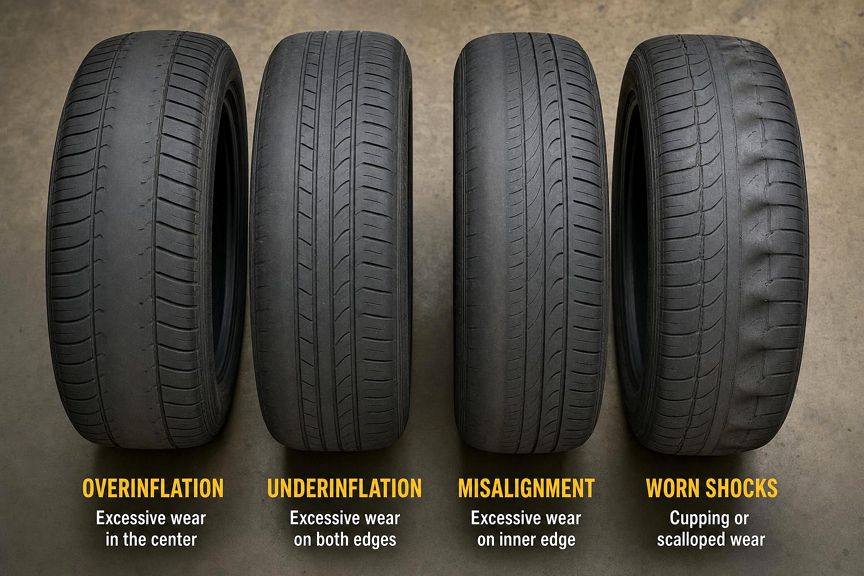
Front tires on front-wheel-drive vehicles perform steering, braking, and power delivery, wearing up to twice as fast as rear tires. Rotate every 5,000 to 7,500 miles to ensure even wear across all four tires.
Driving on tires underinflated by just 20% can reduce tread life by 15% while increasing fuel consumption. Set cold pressure according to the driver's door jamb sticker, not the maximum PSI stamped on the tire sidewall.
Slight toe or camber misalignment scrubs the tire sideways as it rolls, wearing down inner or outer tread edges in as little as 10,000 miles. Check alignment annually or whenever you hit a severe pothole.
Heavy electric vehicles (EVs) and trucks towing trailers place significantly higher vertical and torsional loads on tires. High-torque EVs typically wear through tires 20% to 30% faster than equivalent gasoline vehicles.
Summary: How to Plan Your Tire Budget
- ✓ Budget Discount: Expect real-world tread life to run 15% to 25% lower than the advertised warranty sticker.
- ✓ Brand Choice Matters: Premium brands like Michelin and Pirelli consistently deliver real-world mileage closer to their warranty claims than budget offerings.
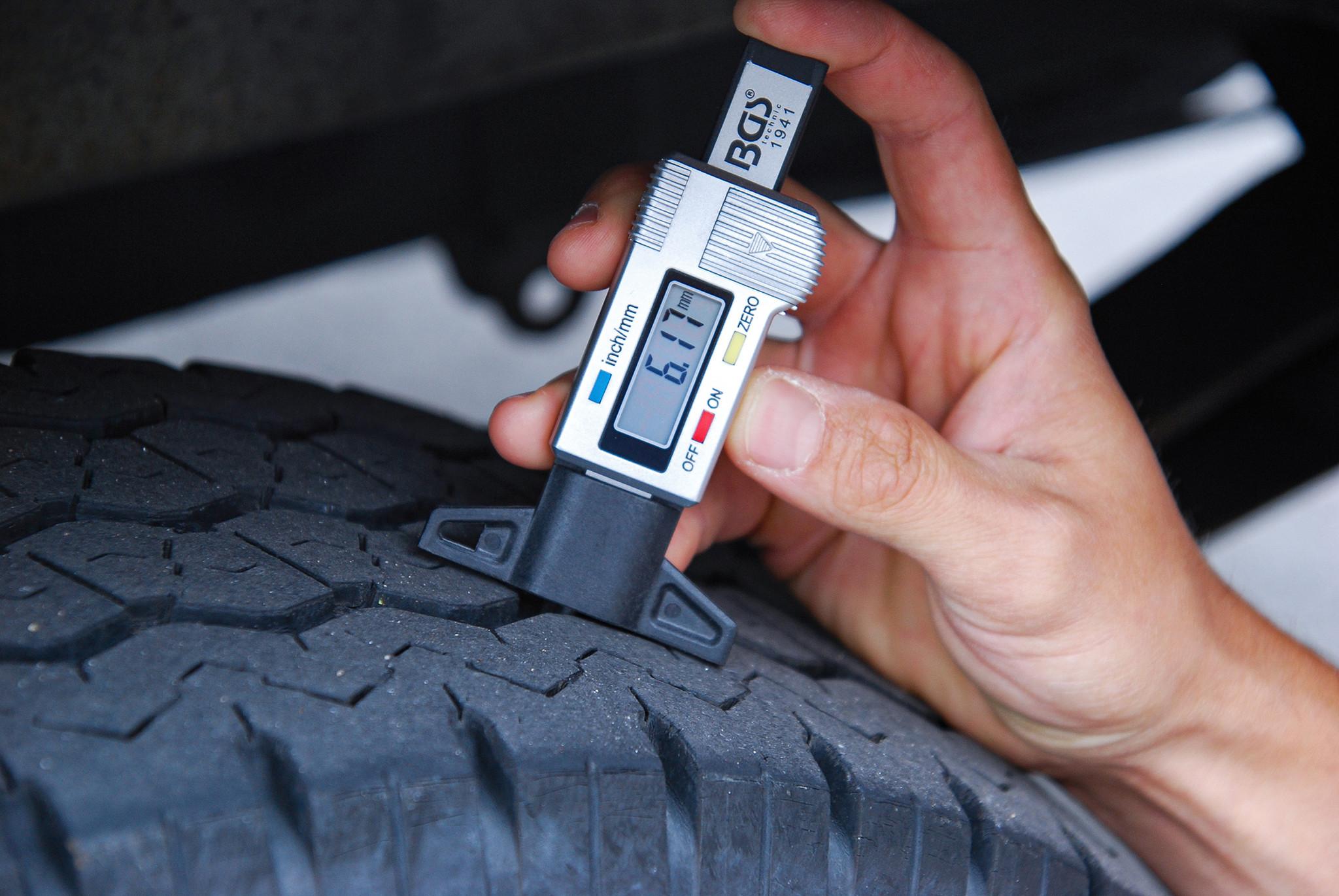
- ✓ Age vs. Tread: Replace tires when tread depth reaches 2/32" (or 4/32" for wet safety), or when the tire turns 6 to 10 years old, whichever comes first.