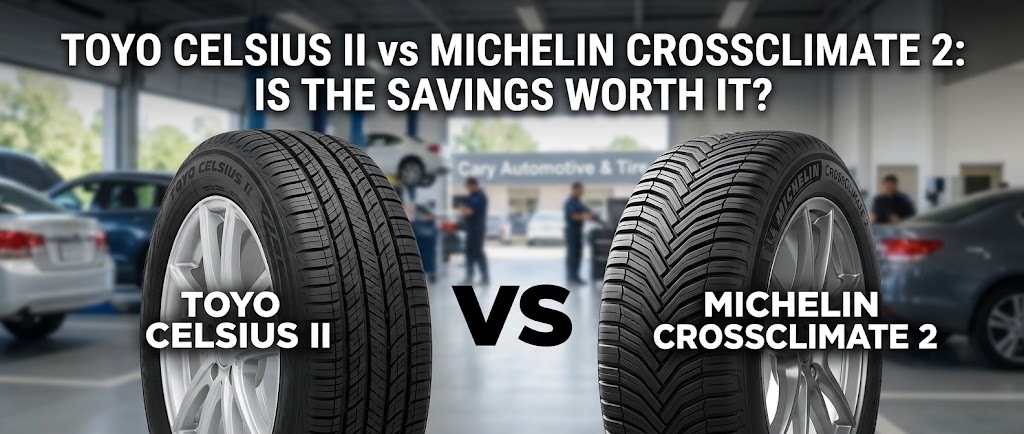
The Toyo Celsius II vs Michelin CrossClimate 2 question is mostly a price question. Both are 3PMSF-certified all-weather tires with a 60,000-mile warranty, and both fit the same everyday sedans and crossovers. In the three sizes we priced between mid-August and early October, the Toyo ran 18 to 29 percent less, which worked out to roughly $258 for a set of four at 225/65R17, though current Michelin promotions may have narrowed that. The Michelin is the better tire in nearly every test we found, so the real question is whether that margin matters to how you drive. For people who see real winters or spend a lot of time at highway speed, it does. For mild winters, a tight budget, or a car on 15-inch wheels, the Toyo is a defensible choice.
One thing worth knowing before you compare:
The largest test collections list a Toyo tire as the Celsius AS2 or Celsius 2, and we could not confirm that it is identical to the US Celsius II. The best evidence we have for the US tire is a 2025 test in size 225/65R17 at a 102H load index, which matches the US Celsius II, plus US owner surveys. We use the European collections as a guide only.
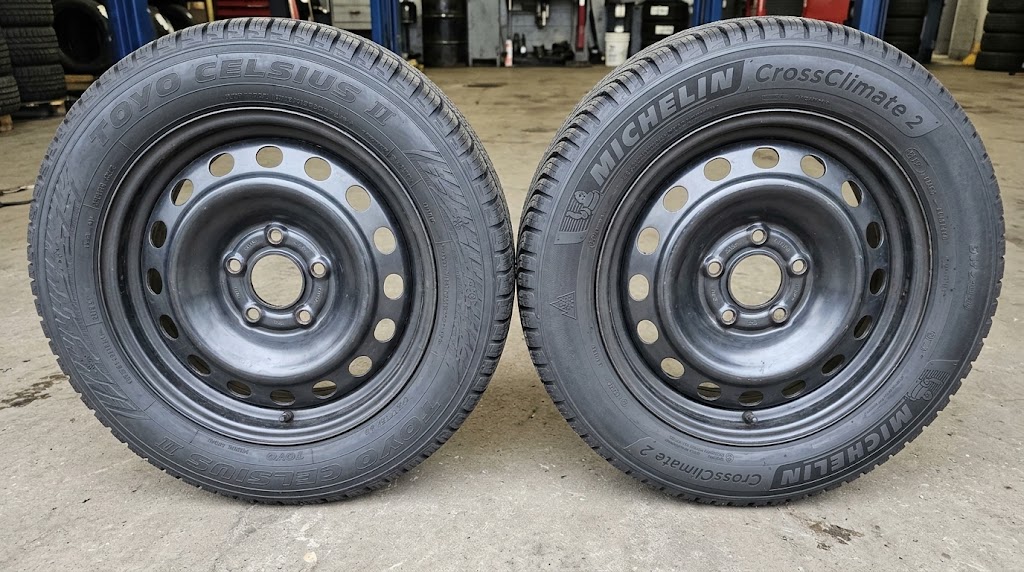
Toyo Celsius II vs Michelin CrossClimate 2 at a Glance
The table below lists what Tire Rack shows for each tire, including owner survey scores on a 10-point scale. The Michelin scores higher in every category, and by the widest margin on treadwear and ice.
| Spec | Toyo Celsius II | Michelin CrossClimate 2 |
|---|---|---|
| Treadwear warranty | 60,000 miles or 5 years | 60,000 miles or 6 years |
| Trial period | 45 days or 500 miles | 60 days |
| Wheel sizes | About 66 sizes, 15" to 22" | About 88 sizes, 16" to 22" |
| Tire Rack rating | 4.0 stars, 103 ratings, 93% recommend | 4.5 stars, 5,509 ratings, 100% recommend |
| Owner survey: wet / dry | 8.9 / 8.9 | 9.4 / 9.4 |
| Owner survey: winter / ice | 8.2 / 7.8 | 8.8 / 8.5 |
| Owner survey: comfort / treadwear | 8.7 / 7.6 | 8.9 / 9.1 |
| Price at 225/65R17 | About $160 per tire | About $225 per tire |
The Price Gap: Up to $258 a Set
We compared US retailer listings in three sizes on a price-comparison site, last checked between mid-August and early October 2026. In all three, the two tires share the same load index and speed rating (102H, 98V, and 91H), so these are like-for-like. The Celsius II was 18 to 29 percent cheaper.
Check Before You Rely on These Gaps:
A later look at TreadCompass's own retailer listings on October 16 found the lowest CrossClimate 2 prices 20 to 29 percent below the Michelin figures in this table ($175.99 at 225/65R17, $154.99 at 225/50R17, and $155.99 at 205/55R16), which points to a current Michelin promotion. We did not have matching current listings for the Celsius II. If its prices have not moved, the gap today could be closer to 9 percent at 225/65R17. Look up both tires in your size before deciding.
| Size | Toyo Celsius II | Michelin CrossClimate 2 | Difference |
|---|---|---|---|
| 225/65R17 | $160.39 | $224.99 | 29% less, about $258 per set |
| 205/55R16 | $144.91 | $195.99 | 26% less, about $204 per set |
| 225/50R17 | $179.70 | $218.99 | 18% less, about $157 per set |
Tyre Reviews' 2025 test used a similar pair of prices ($155 for the Toyo and $220 for the Michelin), about 30 percent apart, and named the Toyo its value pick. Because both tires carry a 60,000-mile warranty, the gap in cost per warranted mile is the same as the gap at the register. Assuming a driver covers 12,000 miles a year, those 60,000 miles take about five years, and the extra $258 at 225/65R17 comes to roughly $52 a year. That is the number to weigh against what the Michelin does better.
What the Michelin Buys You
In 2025, Tyre Reviews tested seven all-weather tires in 225/65R17, with the Toyo at a 102H load index. The CrossClimate 2 won the test and the Celsius II finished last. The table converts the braking distances to feet. Wet braking was measured from 50 mph, dry braking from 62 mph, and snow braking from 25 mph.
| Tyre Reviews 2025 test, 225/65R17 | Toyo Celsius II | Michelin CrossClimate 2 |
|---|---|---|
| Wet braking | 125.5 ft (7th of 7) | 112.9 ft (3rd) |
| Dry braking | 139.1 ft (5th) | 122.5 ft (1st) |
| Snow braking | 54.4 ft (4th) | 53.7 ft (2nd) |
| Snow handling lap | 86.78 sec (7th) | 84.26 sec (1st) |
| Exterior noise | 71.8 dB (3rd) | 72.0 dB (4th) |
| Rolling resistance | 8.55 kg/t (6th) | 7.05 kg/t (1st) |
So the extra money buys about 13 feet on a wet 50 mph stop and about 17 feet on a dry stop from 62 mph. Snow braking was close, with the Toyo less than a foot behind, but the Toyo was one of the two slowest around the snow handling lap, and on ice the testers said it struggled, ranking it seventh in traction. Those are the margins that matter when something steps into the road, not on a normal commute.
A larger set of European comparisons points the same way. Tyre Reviews counts ten shared tests between the tires, and the Michelin won all ten on dry and wet braking. It stopped about 7 percent shorter on dry pavement, 6 percent shorter on wet, and 7 percent shorter on snow, and it pulled about 15 percent harder in snow traction tests. A second aggregator, The Tyre Lab, scores the Michelin 93 out of 100 and the Toyo 54. US owners agree on the direction: the Michelin scores higher on every Tire Rack survey category, and in TireGrades' survey it leads on wet grip (9.4 against 8.8), light snow grip (9.2 against 8.6), and ice grip (8.4 against 7.7).
| European tests, as tracked by Tyre Reviews | Toyo Celsius | Michelin CrossClimate 2 | Who won |
|---|---|---|---|
| Dry braking, average (10 tests) | 41.32 m | 38.54 m | Michelin, all 10, about 7% shorter |
| Wet braking, average (10 tests) | 48.23 m | 45.24 m | Michelin, all 10, about 6% shorter |
| Snow braking, average (7 tests) | 23.56 m | 21.96 m | Michelin, all 7, about 7% shorter |
| Snow traction, pulling force (5 tests) | 1,918 N | 2,206 N | Michelin, all 5, about 15% higher |
| Rolling resistance (6 tests) | 8.15 kg/t | 7.60 kg/t | Michelin, 5 of 6, about 7% lower |
| Predicted tread life (4 tests) | 58,110 km | 51,892 km | Toyo, 3 of 4, about 12% longer |
| Price (3 tests, local currency) | 205.86 | 273.29 | Toyo, about 25% less |
The Real Catch:
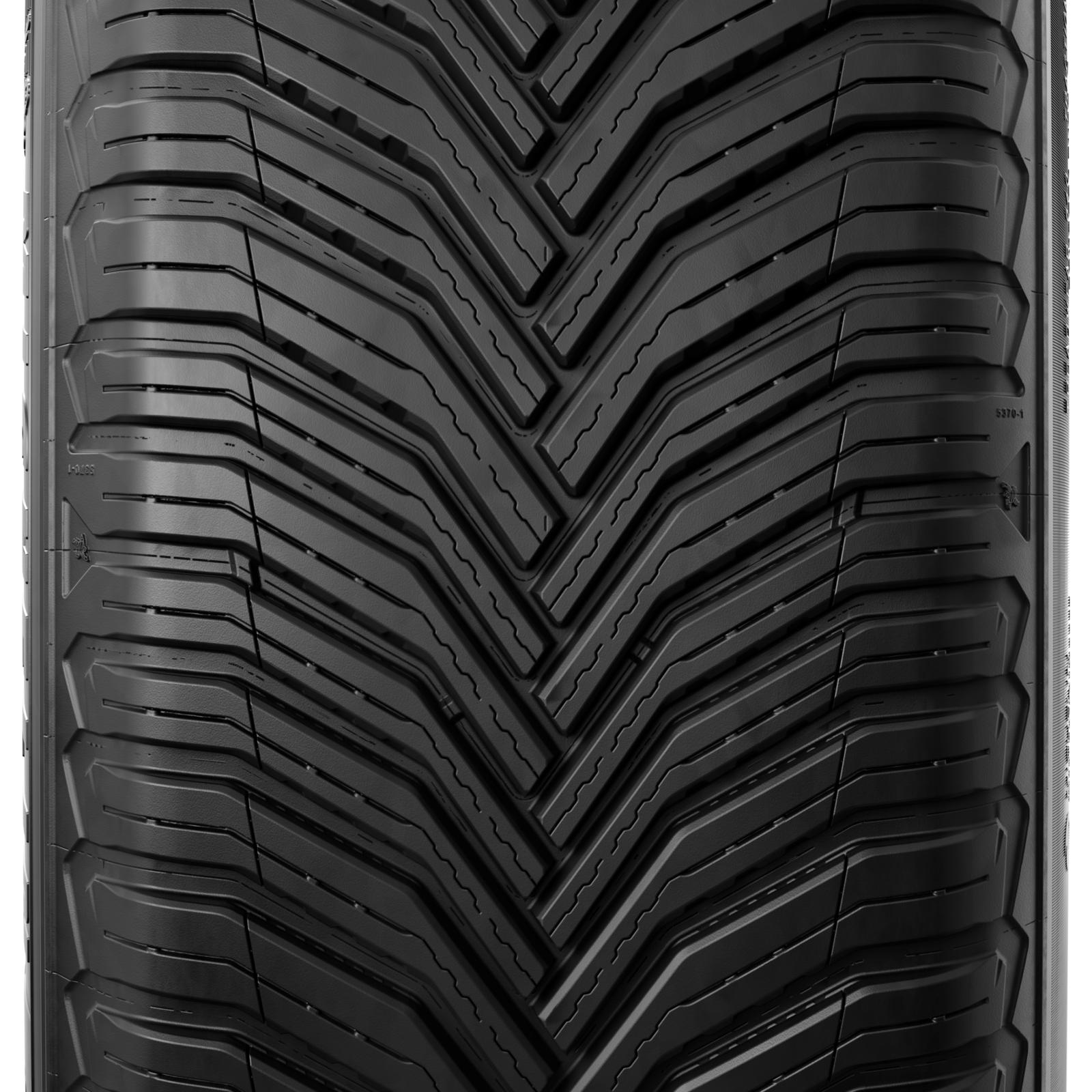
Some of what the extra money buys is small. Lower rolling resistance sounds like a fuel saving, but across the four European tests that measured fuel consumption, the Michelin used only 0.56 percent less. At 12,000 miles a year and 30 mpg, that is about two gallons. The tread life evidence is also mixed: those four tests predicted more life from the Toyo, even though owners score the Michelin far higher on treadwear (9.1 against 7.6 at Tire Rack). The braking and snow advantages are the part you can count on.
Where the Celsius II Holds Up
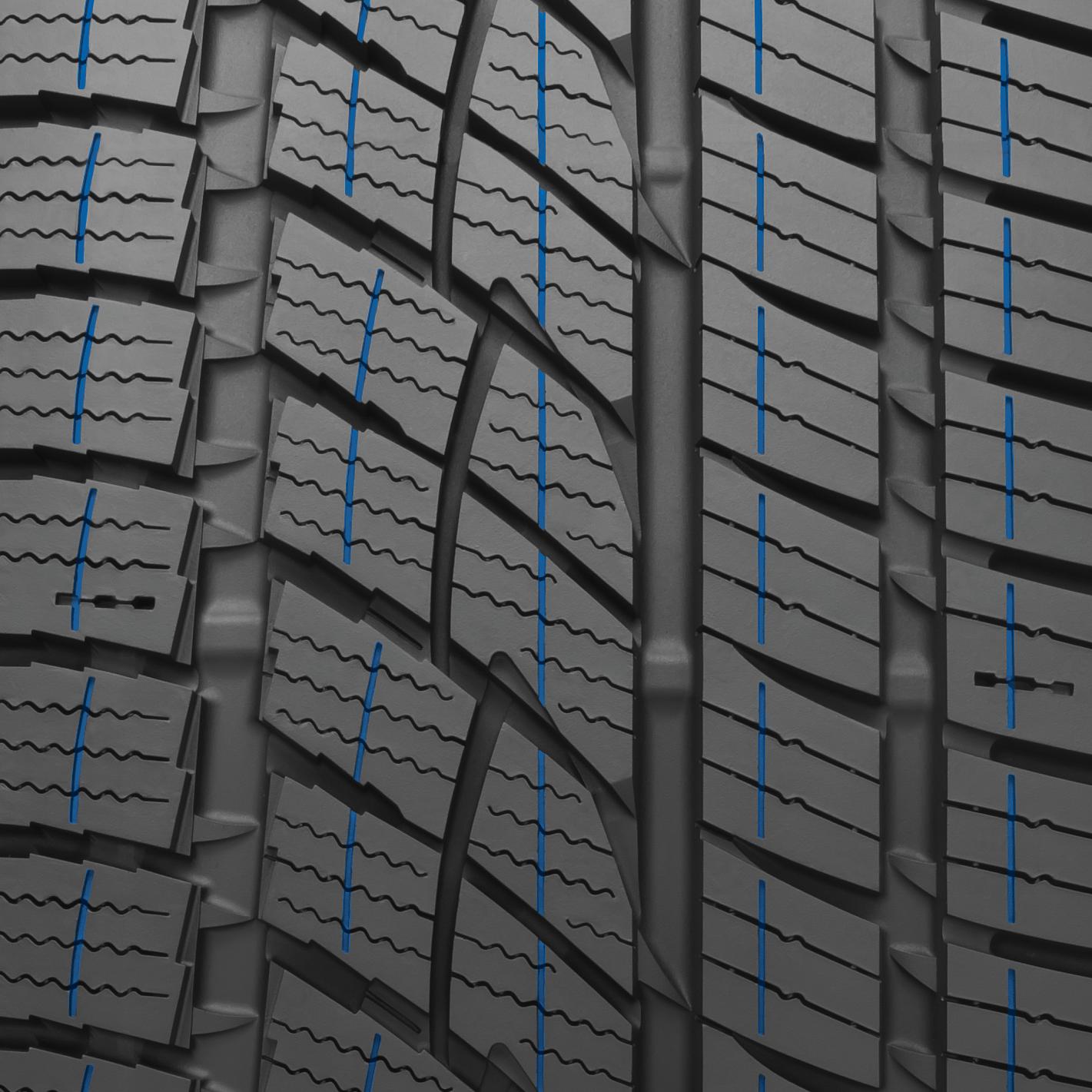
The Toyo is not a weak tire. Toyo launched the Celsius II in February 2023 as the replacement for the Celsius and Celsius CUV, with a silica compound aimed at wet braking, an all-season outer tread paired with a more winter-oriented inner tread, and snow claws and a slush groove for traction. Tire Rack owners score it 8.9 for both wet and dry traction and 8.7 for comfort, close to the Michelin's 9.4, 9.4, and 8.9. In the Tyre Reviews test it was the third quietest of seven, and testers called it excellent for noise but firm over bumps. A four-season AutoGuide test on a Subaru Crosstrek called its wet performance highly impressive and found no excessive wear, and it concluded that for mild-winter regions the small trade-offs are worth it for a single year-round tire.
It also reaches places the Michelin does not. Tire Rack lists the Celsius II in eight 15-inch sizes, and the CrossClimate 2 starts at 16. In the 16-inch and 17-inch range, the Toyo's list on Tire Rack covers at least 18 of the CrossClimate 2's 22 sizes, including all five of the Michelin's 16-inch sizes and the popular 225/65R17. Tire Rack's list may be incomplete, since its page links to a full spec sheet, so check your size directly.
The Real Catch:
Ice, snow handling, and the limit in the wet. AutoGuide said braking on ice and slush was the tire's weakest trait, and Tyre Reviews' testers described its wet handling as almost no feedback and lots of understeer. It is also louder than a regular all-season tire, according to AutoGuide, and it has far less history behind it: 103 ratings at Tire Rack against more than 5,000 for the Michelin. If you live where ice is routine, the Toyo's price advantage disappears.
How We Checked This
Warranty terms, snowflake status, ratings, owner survey scores, and size lists come from each tire's Tire Rack page in October 2026. The braking and handling figures in feet come from Tyre Reviews' 2025 seven-tire test in 225/65R17, converted from meters, with wet braking from 50 mph, dry braking from 62 mph, and snow braking from 25 mph. The European table is Tyre Reviews' aggregation of ten shared tests. It lists the Toyo as the Celsius AS2 while its 2025 test calls the same tire the Celsius 2, and Toyo's European and US pages describe the tread differently, so we treat those averages as a guide to the tire's character and not a measurement of the US Celsius II. The Tyre Lab's scores are a second aggregation, and TireGrades supplied the second owner survey. Prices are US retailer listings from a price-comparison site, last checked between mid-August and early October 2026, and will have moved. The percentage differences in the European table are our own arithmetic on the averages shown, so a few sit a point or two away from the percentages Tyre Reviews states. We left out UTQG treadwear grades because the sources we found disagree.
Who Should Buy What
Buy the Michelin CrossClimate 2 if you deal with real snow or ice, drive a lot at highway speed, or want the shortest stops and the best owner track record. The roughly $52 a year it costs over the Toyo (at 225/65R17 and 12,000 miles a year) buys about 13 feet of wet braking, about 17 feet of dry braking, and a clear lead on snow. Accept paying more up front and a smaller gain in fuel than the rolling resistance numbers suggest.
Buy the Toyo Celsius II if your winters are mild, your car sits on 15-inch wheels, or the $157 to $258 saved on a set matters more than the extra braking margin. Accept the longest wet and dry stops in a seven-tire test, weaker ice grip, and a track record built on a fraction as many ratings.
The gap we saw was 18 to 29 percent. If current listings narrow it to a few dollars a tire, there is little reason to pick the Toyo unless you need a 15-inch size.