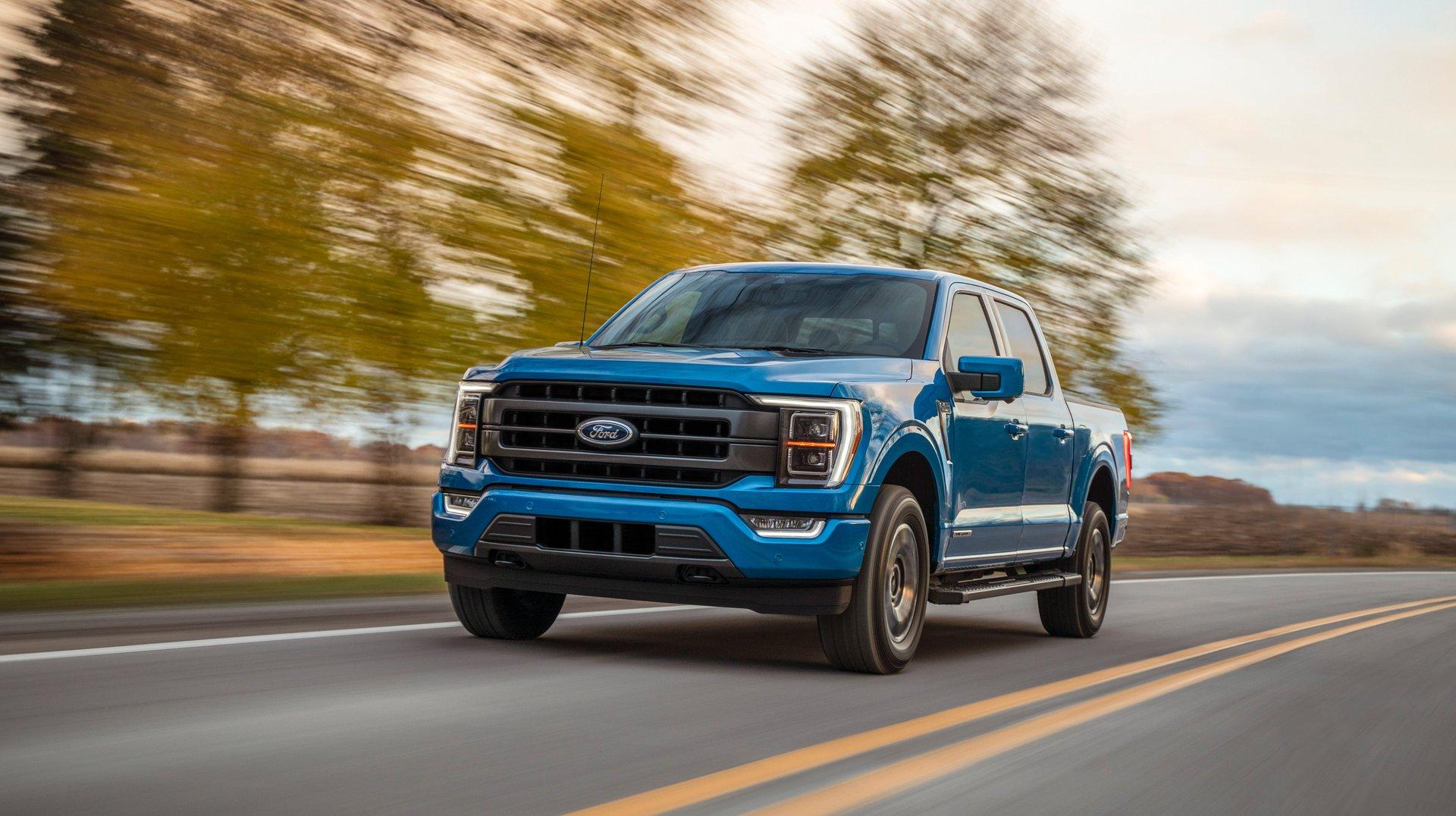
If you've owned an F-150 for more than a year and the highway hum has gotten louder, you're not imagining it, and it's not just "how trucks sound." There are specific, identifiable reasons the F-150's factory tires are loud — some built into the tire category itself, some specific to what Ford actually ships, and one that's a wear pattern owners report constantly but rarely get a straight explanation for. This article covers all three, plus the replacement tires that measurably fix it.
Reason 1: Most F-150 Trims Ship With Inherently Louder All-Terrain Tires
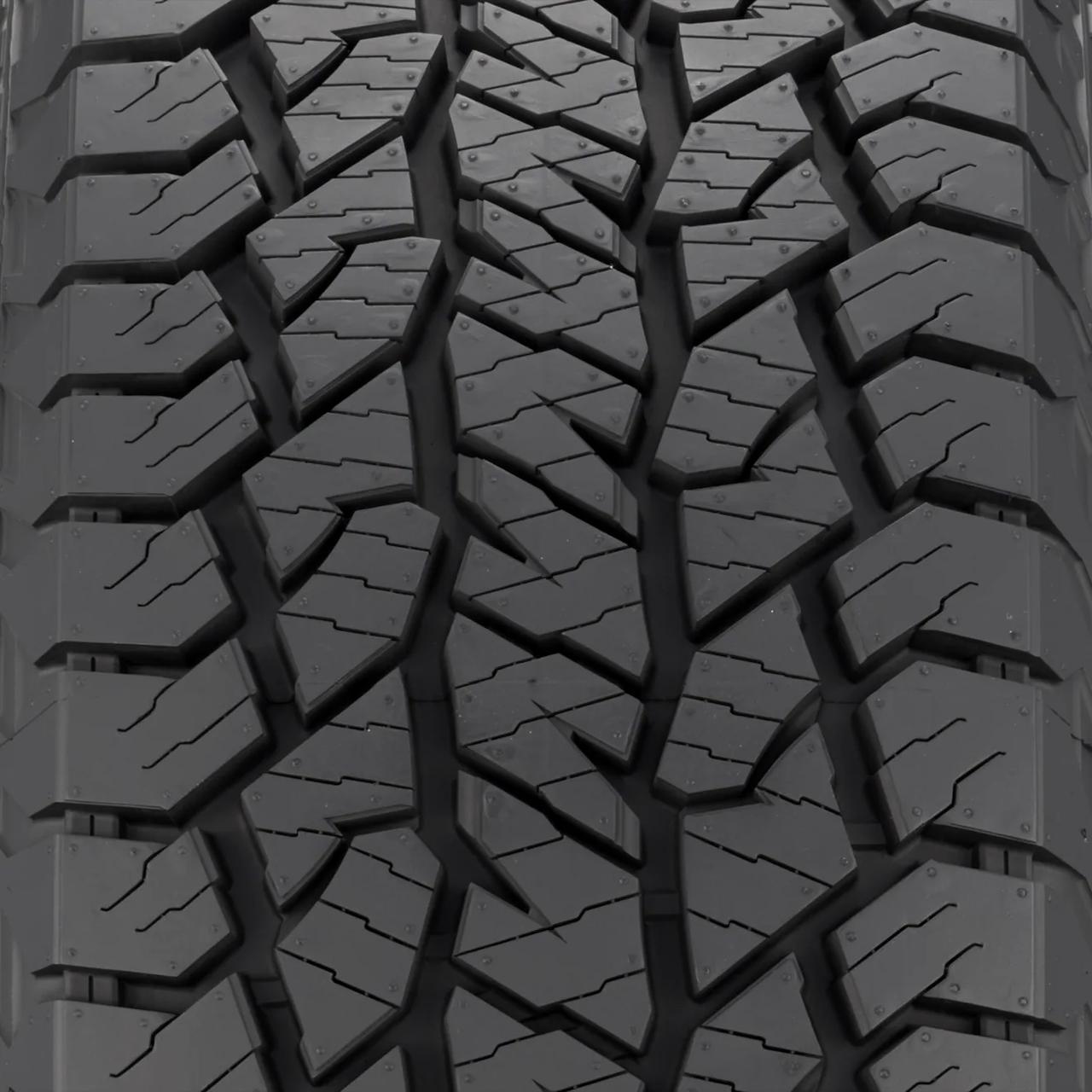
This is the biggest factor, and it's true by design, not by defect. All-terrain tires use a blockier tread pattern with larger voids — the gaps between tread blocks — to grip dirt, gravel, and loose surfaces. Those same voids are what generate road noise on pavement: air gets forced into and out of the gaps at highway speed, and the larger and more irregular the voids, the more noise that process makes. Aggressive all-terrain and mud-terrain patterns create 5 to 10 decibels more noise than touring tire designs — which sounds small until you know that a 10 dB increase is roughly a doubling of perceived loudness to the human ear.
Most F-150 trims — the XLT, Lariat, and off-road-oriented packages like the FX4 — ship with all-terrain tires from the factory, with the Hankook Dynapro AT2 and Goodyear Wrangler Territory AT being the most common. Highway-terrain tires are designed specifically for paved-road performance and use tighter tread patterns that reduce road noise and improve ride comfort, while all-terrain tires trade some of that quietness for capability most daily-driving owners never actually use. If your F-150 is primarily a highway and commuting vehicle, you're paying a noise penalty for capability that isn't doing anything for you.
Reason 2: Uneven Wear Makes a "Loud" Tire Progressively Worse
This is the piece most explanations skip, and it's a documented, repeated pattern specifically on the Hankook Dynapro tires that ship on a large share of F-150s. Owners across multiple forums report the same thing: inner and outer edge wear appearing as early as 5,000 miles, worsening steadily, with the tire getting audibly louder as the wear progresses.
One F-150 Lightning owner reported all four Hankook Dynapro tires worn bald on the inner and outer edges at 22,000 miles despite maintaining proper inflation; Ford's response was that Hankook considered it normal wear. Another owner on the F150gen14 forum described the same edge-wear pattern as "garbage OEM Hankook Dynapro's that everyone complains about."
Uneven wear compounds the noise problem in two ways:
- Feathering: An irregular tread surface generates more noise than the baseline pattern.
- Disrupted Pitch Sequencing: Manufacturers arrange tread block sizes to cancel out tonal noise. Once blocks wear unevenly, this acoustic engineering stops working.
What this means practically: If your F-150's tires have gotten louder over time rather than being loud from day one, uneven wear is likely the culprit. A quick visual check across the tread width or a shop inspection can confirm this before you spend money on a replacement tire that will just develop the same problem. Rotation on schedule (every 5,000-7,500 miles) and a proper alignment check are the best prevention.
Reason 3: The F-150's Weight and Fuel-Economy Targets
The F-150 is a genuinely heavy vehicle — most trims sit in the 4,700 to 5,700 lb range empty. Factory tires have to handle that load, tow ratings, and CAFE (Corporate Average Fuel Economy) targets simultaneously. OEM tire selection prioritizes meeting those engineering targets at the lowest cost, not cabin quietness. This means the factory tire on your specific truck was chosen to check several functional boxes at once, with comfort taking a back seat.
Quick Comparison: Quiet Replacement Options
| Tire | Category | Warranty | UTQG | 3PMSF | Best for |
|---|---|---|---|---|---|
| Michelin Defender LTX M/S2 | Highway Terrain All-Season | 70,000 mi (XL sizes) | 800 AA | No | Maximum quiet, longest tread life |
| General Grabber HTS60 | Highway Terrain All-Season | 65,000 mi (S/T) · 50,000 mi (H/LT) | 680 AB | No | Value pick, OEM-proven quiet option |
| Bridgestone Dueler A/T Ascent | All-Terrain All-Season | 60,000 mi | 600 AB | Yes | Quietest option that still handles light off-road |
Best Overall: Michelin Defender LTX M/S2
If quiet and tread life are your two priorities and you don't need all-terrain capability, this is the tire the data points to most clearly. Michelin's own treadwear testing — conducted specifically on a 2020 Ford F-150 in 275/55R20, the truck's actual factory size — showed the Defender LTX M/S2 achieving an estimated 95,200 miles of tread life, easily beating competitors tested on the exact same truck.
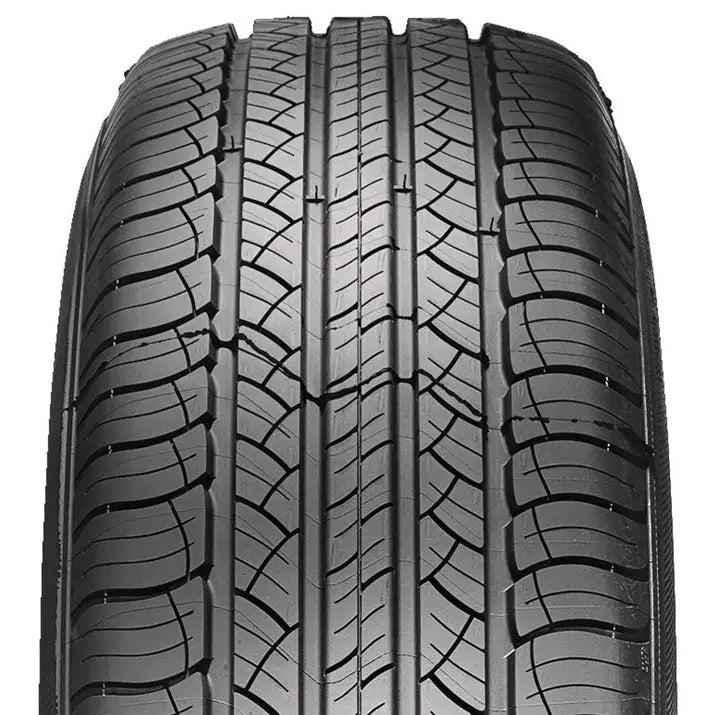
Owner reviews consistently praise the "smooth, quiet ride" and "high marks in noise reduction." It carries a 70,000-mile warranty in most XL sizes and an 800 AA UTQG rating.
Tradeoff: This is a highway-terrain tire with no 3PMSF winter rating. It is not built for real off-road use. It solves the noise problem perfectly, but doesn't solve an off-road capability need.
Best Value: General Grabber HTS60
This isn't a hypothetical recommendation. The Grabber HTS60 is factory-fitted as OEM equipment on the 2021 Ford F-150 Limited. General and Ford both concluded it was quiet and capable enough for Ford's top trim level. It uses General's Comfort Balance Technology, incorporating sound barrier ribs engineered specifically to reduce cabin noise.
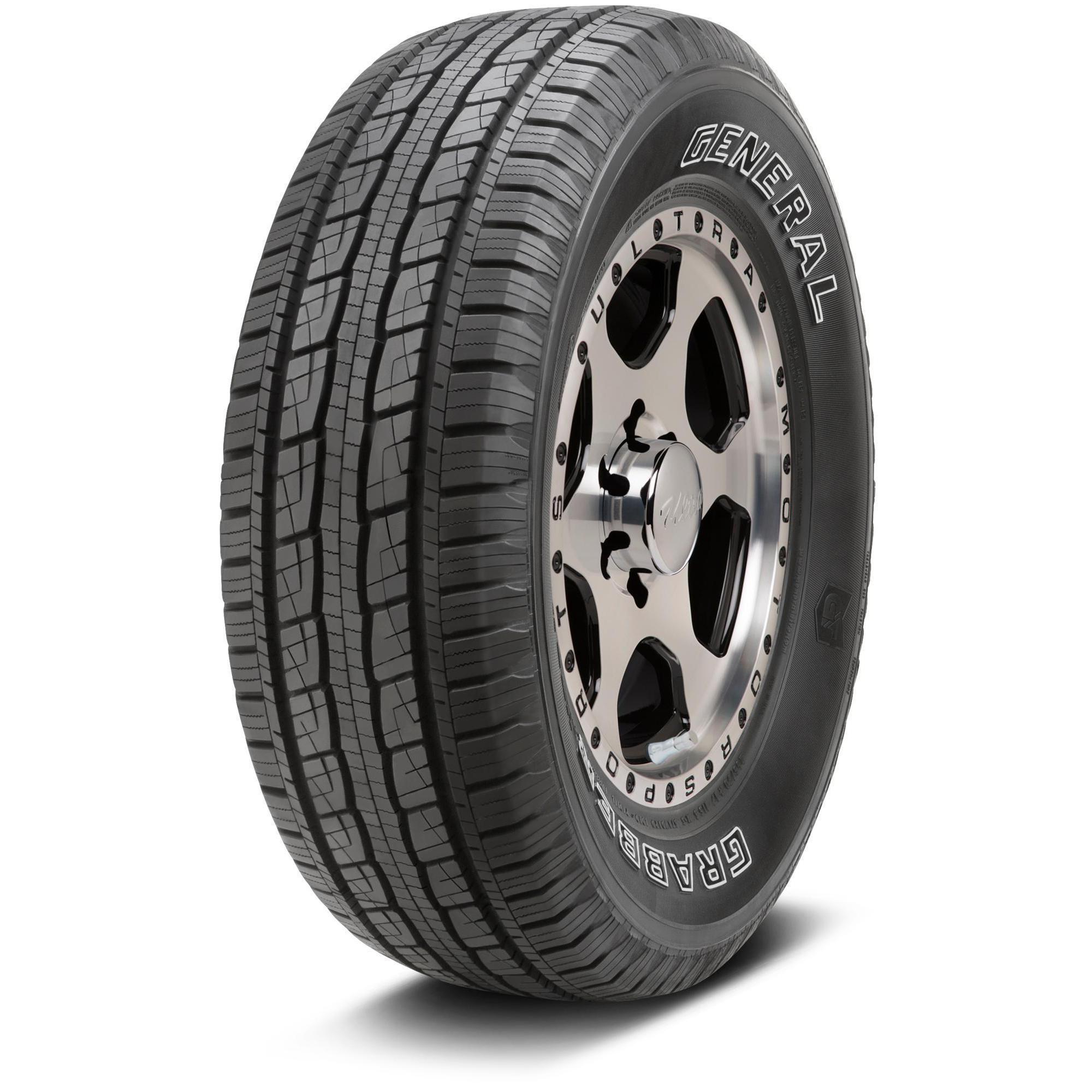
Tradeoff: Wet grip performance is a repeated weak point in independent scoring. No 3PMSF winter rating, and like the Michelin, it is strictly a highway-terrain tire.
Best if You Still Need All-Terrain Capability: Bridgestone Dueler A/T Ascent
If your F-150 genuinely does light off-road duty and you can't give that up, the Dueler A/T Ascent is your most credible middle ground. Built around Bridgestone's ENLITEN technology, it also carries the 3PMSF severe-snow certification. Real owner reports describe it as producing only "a faint hum" — genuinely quiet for the all-terrain category.
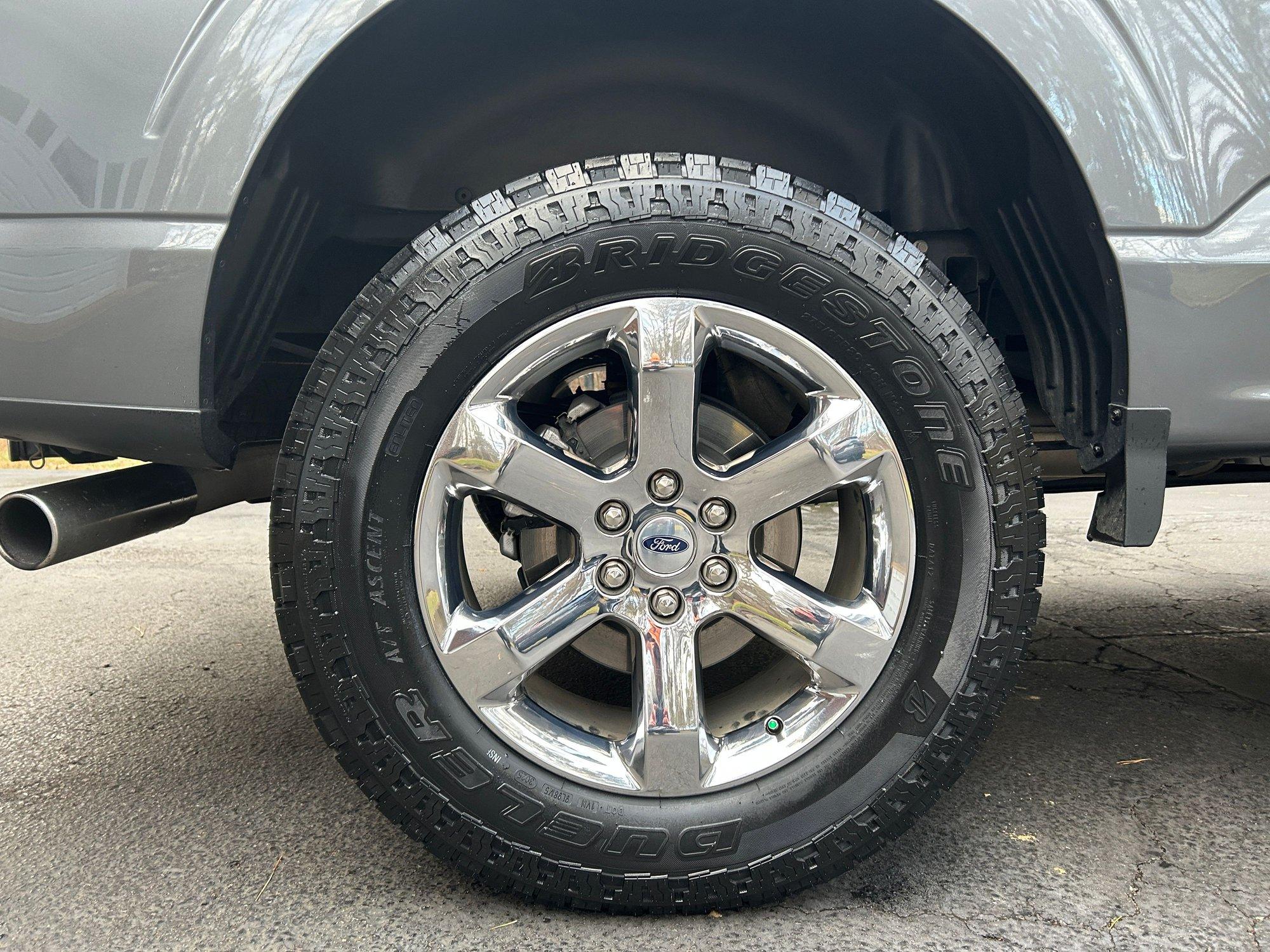
Tradeoff: It is quieter than most AT tires, but not as quiet as a dedicated highway-terrain tire. Expect a genuine step down in tread life (600 AB UTQG) from the highway options.
The Bottom Line
If your F-150 is primarily a daily driver that rarely leaves the pavement, the noise problem has a clear fix: switch from the factory all-terrain tire to a genuine highway-terrain tire. The Michelin Defender LTX M/S2 has the strongest independent data backing it, while the General Grabber HTS60 delivers similar quietness at a lower price point. If you need to keep real off-road capability and winter traction, the Bridgestone Dueler A/T Ascent is the perfect compromise.
Whatever you choose, check for uneven wear and get an alignment inspection first. A new tire on a truck with an alignment problem will get loud again — just on a different, more expensive schedule.