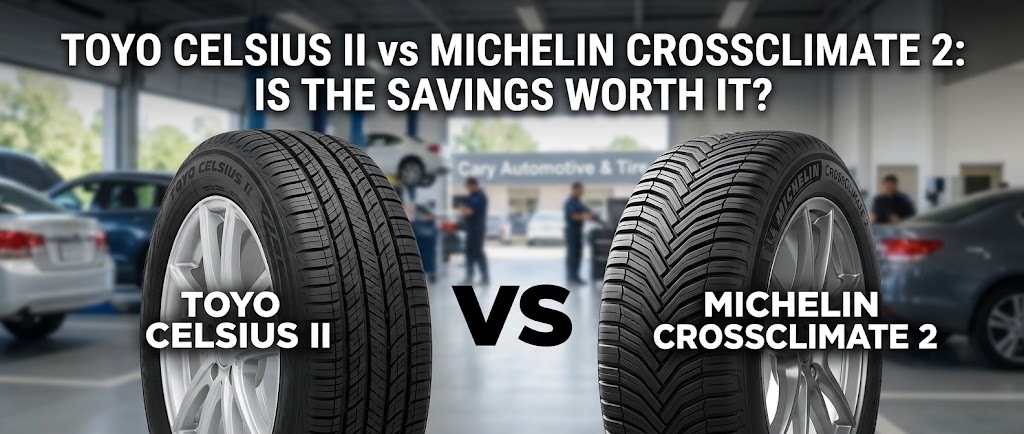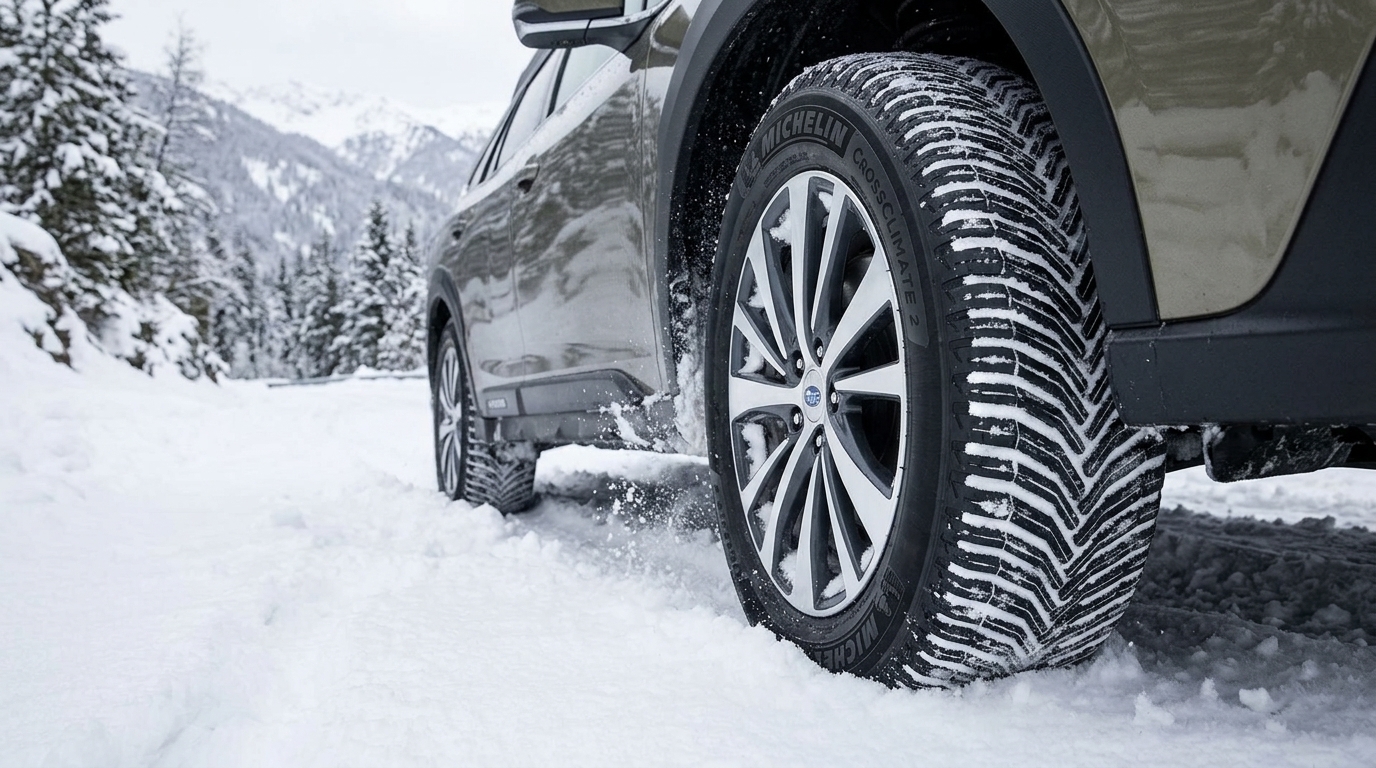
The Michelin CrossClimate 2 is the all-weather tire everything else gets measured against, and in the independent seven-tire test we lean on below, it finished first. That makes Michelin CrossClimate 2 alternatives worth shopping only if you know what you are giving up, because none of the five tires here behaves like it. Each one wins something and loses something, and the losses are measurable: a few feet of braking, a few decibels, or a smaller size range. This guide puts numbers on those trade-offs so you can pick the one whose weakness you can live with.
One thing worth knowing:
The braking numbers below come from a single 2025 test of tires in 225/65R17, run in metric units, which we convert to feet. A different size or a different test day would shift the gaps, so read them as a pattern, not a guarantee. Prices are shown as gaps against the CrossClimate 2, not as dollar amounts, because they move with rebates every few weeks.
What You Are Replacing: The CrossClimate 2
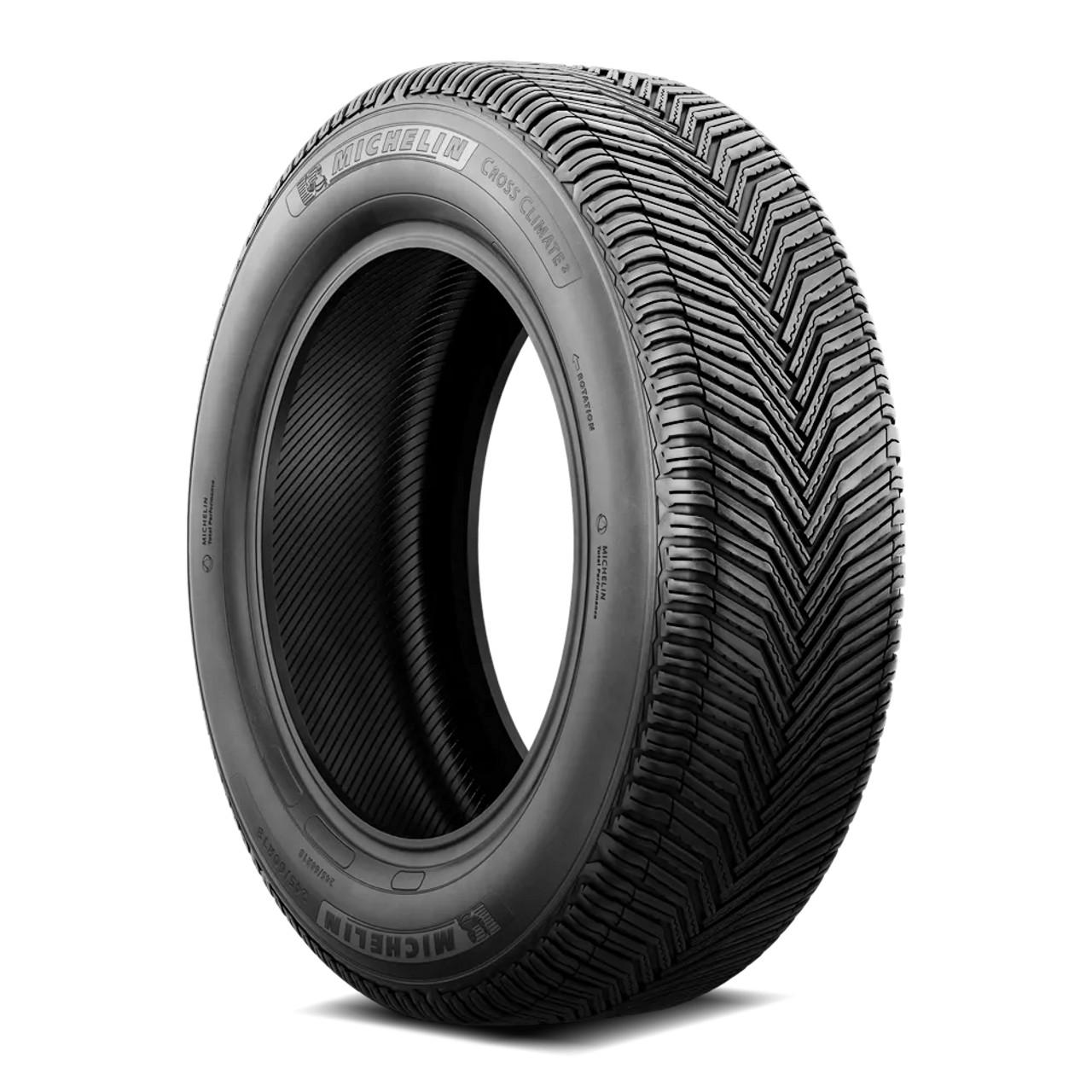
Tire Rack lists the CrossClimate 2 with a 60,000-mile warranty, the snowflake symbol, and 88 sizes across seven wheel diameters from 16 to 22 inches. It holds 4.5 stars with a 100 percent recommendation rate, and TireGrades scores it 9.0 overall from more than 47 million owner-reported miles. In the 2025 test, it posted the best dry braking and the lowest rolling resistance of the seven tires, and it took first overall.
So why look elsewhere? Three reasons come up. It does not come in sizes under 16 inches. It was beaten on wet braking and noise in that same test. And buyers who wait for Michelin's newer CrossClimate 3 should know that Michelin said in November 2025 that North America will keep the CrossClimate 2 for the next several years, with no North American launch date announced for the newer tire.
Michelin CrossClimate 2 Alternatives at a Glance
The table below uses the same columns as each section. The rating column names its source, because Tire Rack's pages for the Goodyear and Nokian would not load for us, and its Vredestein page loaded with only a partial size list, so those rely on other sources.
| Tire Model | Treadwear Warranty | 3PMSF | Owner Rating | Sizes | Price vs. CrossClimate 2 | Best For |
|---|---|---|---|---|---|---|
| Goodyear Assurance WeatherReady 2 | 60,000 mi | Yes | 4.7, our database (1,367 ratings) | About 78, per one retailer | About 2% to 6% lower | Wet roads |
| Pirelli Cinturato / Scorpion WeatherActive | 60,000 mi | Yes | 4.5, Tire Rack (539 and 1,777 ratings) | 29 car sizes, 31 SUV sizes | About 3% lower | Quiet ride |
| Nokian Remedy WRG5 | 60,000 mi, no age limit | Yes | 4.9, SimpleTire (17 reviews) | 76, per SimpleTire | About 1% to 4% lower | Snow and dry roads |
| Vredestein Quatrac Pro+ | 55,000 mi (50,000 mi on the older Pro) | Yes | 4.5, Tire Rack (1,195 ratings) | 108, 17" to 22", per Apollo | Median about 10% lower, varies widely by size | Wet grip at a lower price |
| Toyo Celsius II | 60,000 mi | Yes | 4.0, Tire Rack (103 ratings) | About 66, 15" to 22" | About 18% to 29% lower (August to October listings) | Sizes the Michelin does not make |
How They Compare in One Independent Test
In 2025, Tyre Reviews tested seven all-weather tires in 225/65R17 (the Nokian was a 106H load index), with a summer tire and a Nokian winter tire as references. Wet braking was measured from 50 mph, dry braking from 62 mph, and snow braking from 25 mph. The table shows each tire against the CrossClimate 2, which stopped in 113 feet on wet pavement, 122 feet on dry pavement, and 54 feet on snow, and measured 72.0 dB of external noise. The Vredestein was not part of this test, and the Bridgestone WeatherPeak is included because it was.
| Tire (Test Rank) | Wet Braking | Dry Braking | Snow Braking | Noise | Rolling Resistance |
|---|---|---|---|---|---|
| Michelin CrossClimate 2 (1st) | 113 ft | 122 ft | 54 ft | 72.0 dB | 7.05 kg/t (lowest) |
| Goodyear WeatherReady 2 (2nd) | 5 ft shorter | 7 ft longer | 1 ft longer | 0.9 dB louder | 9.24 kg/t |
| Pirelli Scorpion WeatherActive (2nd) | 2 ft shorter | 12 ft longer | 1 ft longer | 1.7 dB quieter | 7.78 kg/t |
| Nokian Remedy WRG5 (4th) | 10 ft longer | 12 ft longer | About the same | 0.8 dB louder | 7.31 kg/t |
| Bridgestone WeatherPeak (5th) | 6 ft longer | 23 ft longer | About the same | 0.3 dB quieter | 7.14 kg/t |
| Toyo Celsius II (7th) | 13 ft longer | 17 ft longer | About the same | 0.2 dB quieter | 8.55 kg/t |
Two things stand out. Snow braking was nearly identical across all of them, within about a foot at 25 mph, so the snowflake tires on this list are not separated by that one measure. And the gaps that do exist are in dry and wet stopping. The Michelin won dry braking outright, and the Goodyear and the Pirelli were the only two tires that beat it on wet pavement.
Price Differences: Two Tires Looked Meaningfully Cheaper
We compared US retailer listings in three sizes (225/65R17, 225/50R17, and 205/55R16), as shown on a price-comparison site that was last checked between mid-August and early October 2026. At 225/65R17, the CrossClimate 2 was about $225 per tire. Against that, the Goodyear ran 2 to 6 percent lower across the sizes we could compare, the Pirelli about 3 percent lower, and the Nokian 1 to 4 percent lower. That is roughly $5 to $11 per tire, which a single retailer promotion, such as the $80 off a set of four some retailers were running, can erase or reverse.
Two tires break that pattern. The Toyo Celsius II ran about 18 to 29 percent below the Michelin depending on size, or roughly $258 less for a set of four at 225/65R17. That saving is large enough to matter, and it lines up with the test: the Toyo is the tire that gave up the most stopping distance. The Vredestein Quatrac Pro+ is the other tire with a real gap, though the gap depends on the size, as the next paragraph shows. The older Pro averaged about 19 percent cheaper in the European listings behind the head-to-head tests. We could not compare the plain Quatrac's price here.
A later look at TreadCompass's own retailer listings, on October 16, complicates the dollar figures above. The lowest CrossClimate 2 prices there ($175.99 at 225/65R17, $154.99 at 225/50R17, and $155.99 at 205/55R16) are 20 to 29 percent below the August to early October figures, which points to a current Michelin promotion. Gaps measured against the earlier Michelin prices may be smaller today. For the Pro+, where that data gives a large sample, the lowest price was below the CrossClimate 2's in 43 of 63 shared sizes, with a median gap of about 10 percent. In the 17-inch sizes the median gap shrinks to about 1.5 percent, and at 225/65R17 the Pro+ ($188.77) was 7 percent higher than the Michelin.
Check Before You Buy:
Retailer prices and rebates change constantly, and some of the listings we used were weeks old, including the Nokian at 225/65R17 and the Michelin at 225/50R17. Use these figures to judge the size of the gap, then check your own size on the pricing pages linked below.
Goodyear Assurance WeatherReady 2: The Closest Overall Match
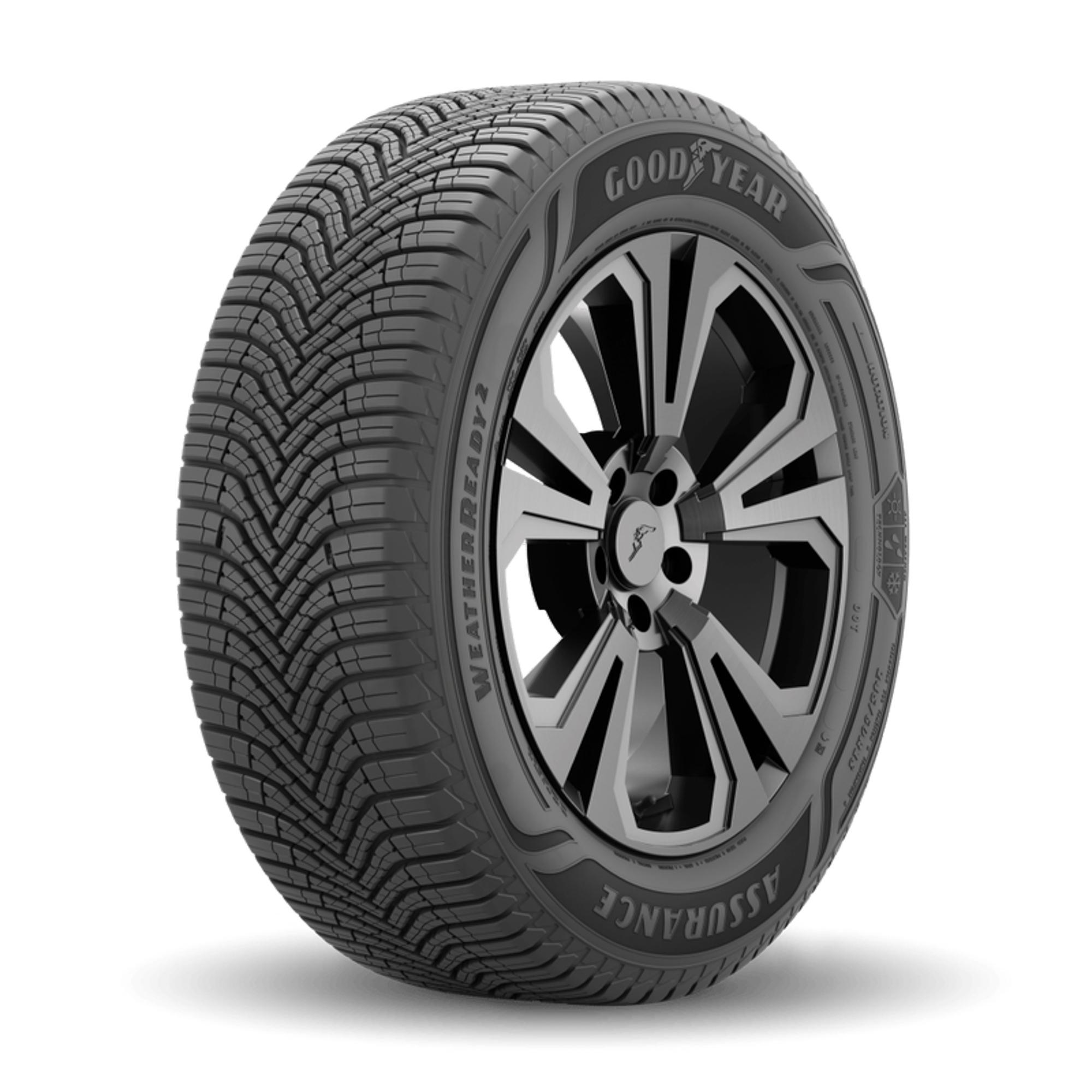
Of the five, this is the one that comes nearest to matching the Michelin across the board. It finished second in the test and posted the shortest wet stop of the seven, about five feet shorter than the CrossClimate 2 from 50 mph. It carries the snowflake and a 60,000-mile warranty, and our database shows 4.7 stars across 1,367 ratings. One retailer lists it in about 78 sizes.
The Real Catch:
You trade dry braking and efficiency for the wet grip. It needed about seven more feet to stop on dry pavement from 62 mph, and its rolling resistance (9.24 kg/t) was the highest of the seven, against 7.05 for the Michelin, which should show up as a small fuel-economy cost. It is also a newer tire, so wear data is thin, and some owners in our database report extra road noise on rough pavement.
Pirelli WeatherActive: The Quiet One
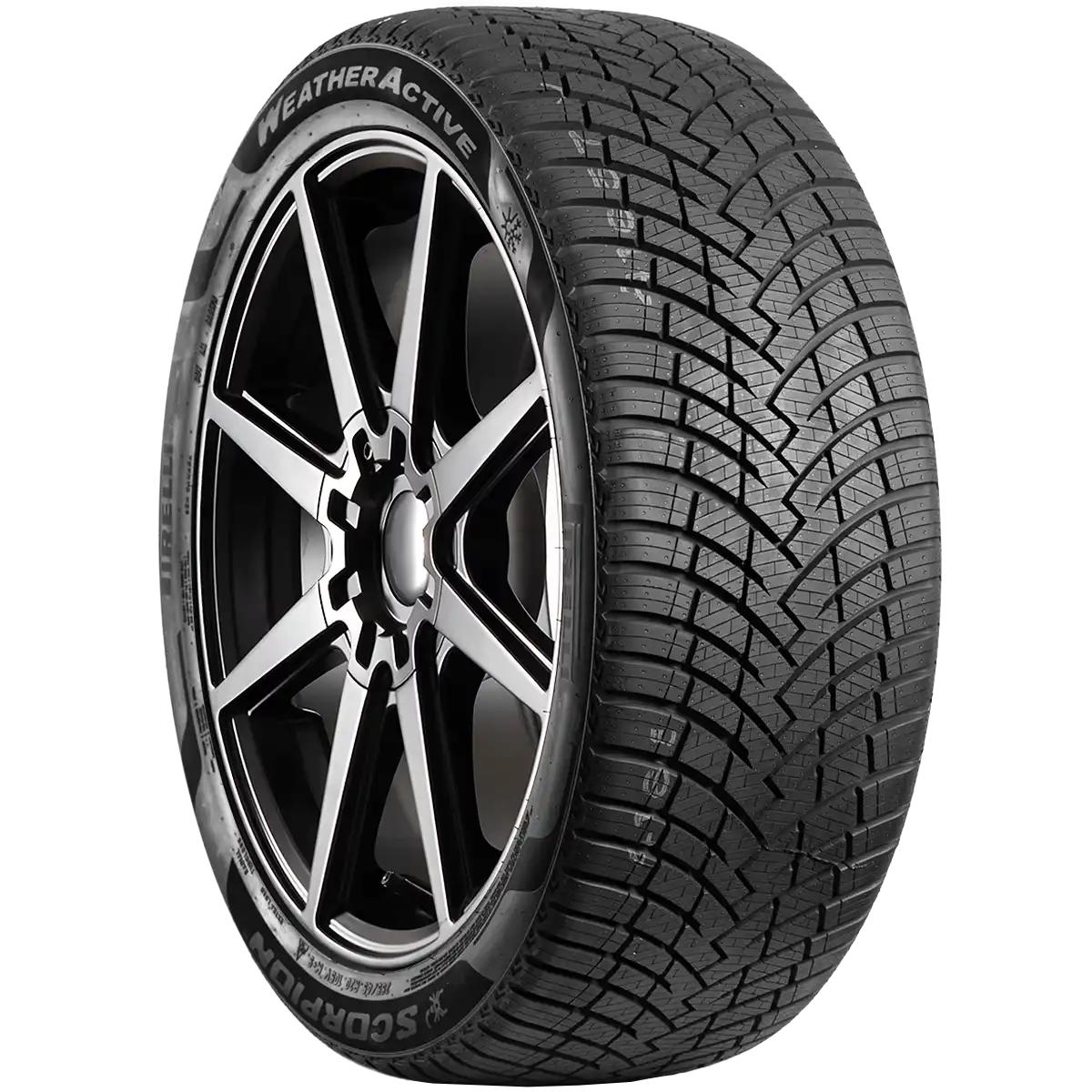
Pirelli sells this tire in two versions in North America, the Cinturato WeatherActive for cars and the Scorpion WeatherActive for SUVs and crossovers. Tire Rack lists both with a 60,000-mile warranty and the snowflake. The Cinturato comes in 29 sizes from 16 to 20 inches at 4.5 stars with 99 percent recommending it, and the Scorpion in 31 sizes from 17 to 22 inches at 4.5 stars with 100 percent recommending it. The Scorpion was the tested version, and it was the quietest tire in the group at 70.3 dB, 1.7 dB below the Michelin, while also stopping about two feet shorter on wet pavement.
The Real Catch:
Dry stopping distance. The Scorpion needed about 12 feet more than the Michelin to stop from 62 mph. Our database also notes that its grip in powdery snow and in wet cornering trails the CrossClimate 2, so it suits drivers who see more ice and cold dry pavement than deep snow.
Nokian Remedy WRG5: Strong in Snow, Soft in the Wet
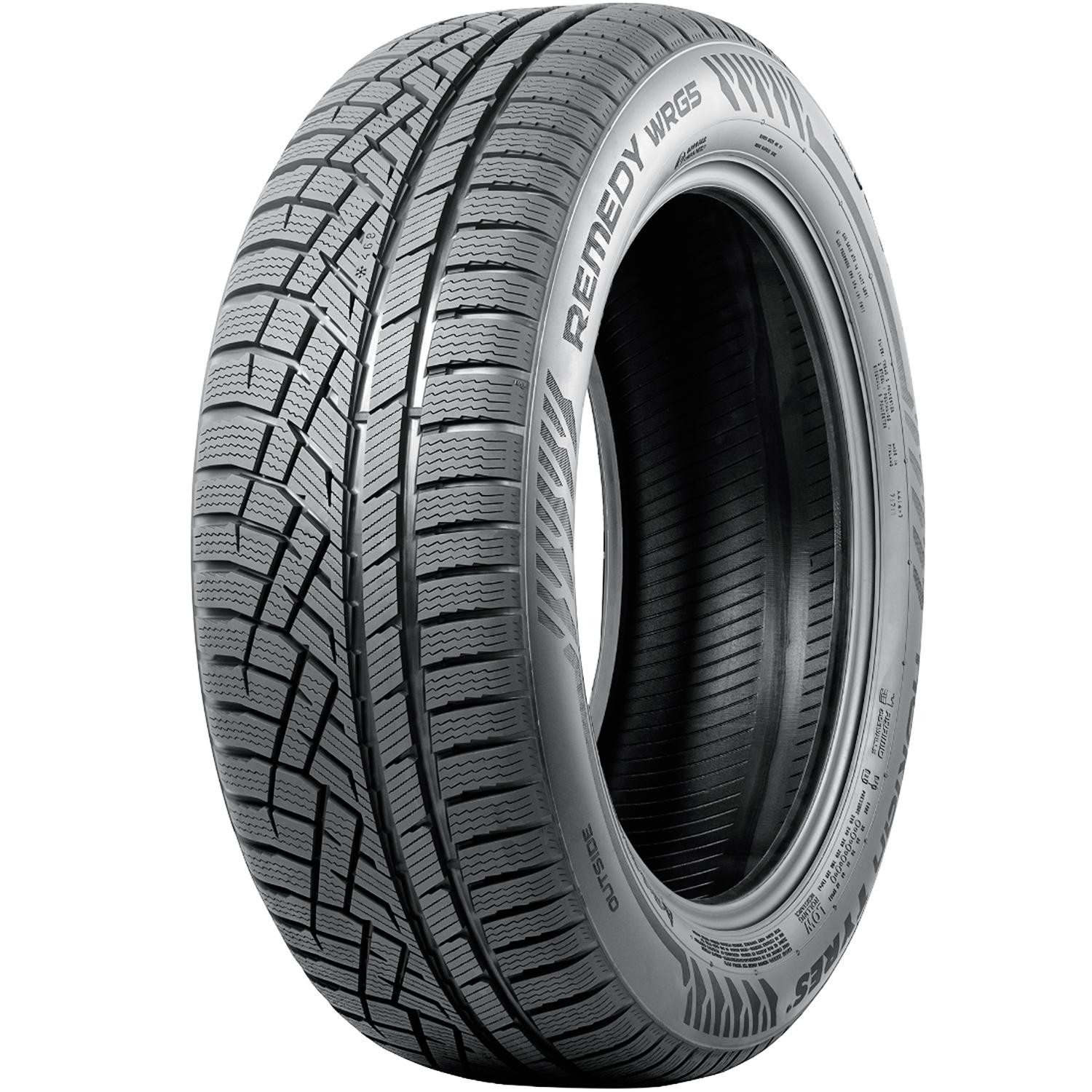
Nokian is a Finnish winter-tire specialist, and the WRG5 shows it where it counts. In the test it matched the Michelin on snow braking to within half a foot, and a video summary of the same test named it the most even and predictable tire on snow. The warranty is 60,000 miles with no age limit, and SimpleTire lists 76 sizes. Owner feedback is positive but thin, at 4.9 stars across only 17 reviews there.
The Real Catch:
Wet braking is the weak spot. It stopped about 10 feet longer than the Michelin on wet pavement and 12 feet longer on dry, and it placed fourth of seven in that test and fifth of seven in a separate Car and Driver test, according to Tyre Reviews. Another comparison reported wet oversteer on an autocross course. If your winters are harsher than your rainy seasons, that trade can make sense. If you drive mostly in the rain, it does not.
Vredestein Quatrac Pro+: Wet Grip at a Lower Price
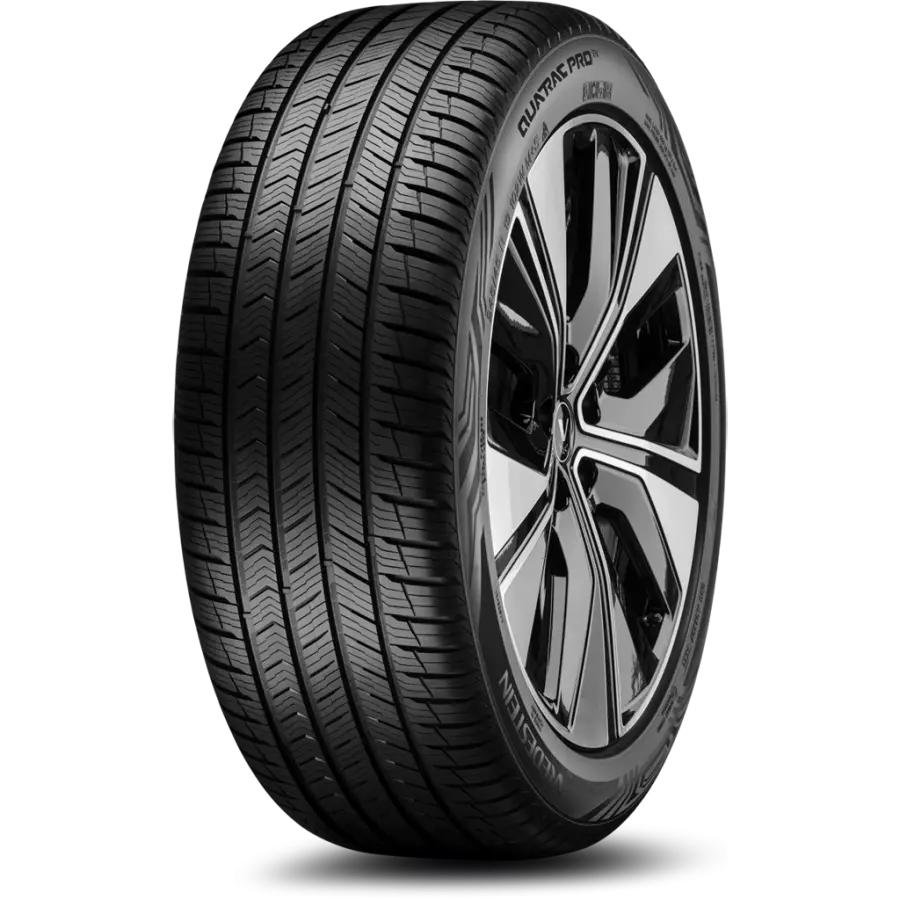
The Quatrac Pro+ is Vredestein's current tire for 17-inch and larger wheels, and Tire Rack calls it the successor to the Quatrac Pro. It is the cheapest alternative here after the Toyo. Tire Rack lists it with a 55,000-mile warranty and the snowflake, at 4.5 stars with 98 percent recommending it, though from a smaller pool of about 900 survey ratings. Most of the independent testing against the CrossClimate 2 is of the older Pro. In eight European tests from 2021 to 2024, the Pro won wet braking in seven, by about 5 percent on average. The Michelin won dry braking in all eight by about 9 percent, snow braking in six of seven tests, and every test of straight-line aquaplaning. Noise was a tie. The one shared test we found that included the Pro+ (Auto Bild, 2025, size 245/45R18) scored wet braking level and put the Michelin well ahead on dry braking and snow, so treat the Pro's results as a guide to the Pro+'s character rather than a measurement.
Sizes are not the limit: Apollo lists the Pro+ in 108 sizes from 17 to 22 inches, more than the Michelin's 88, including 225/65R17 and 225/50R17. What it lacks is the small end, because nothing below 17 inches is offered. Drivers on 15- and 16-inch wheels should look at the plain Quatrac, which Tire Rack lists in 41 sizes from 15 to 20 inches with a 55,000-mile warranty and 4.5 stars across 689 ratings. Tire Rack owners score it within a tenth of a point of the Pro+ on wet and dry traction (9.1 and 9.2 against 9.2 and 9.3).
The Real Catch:
Snow, dry braking, warranty, and wheel size. The Michelin beat the older Pro on snow braking in six of seven tests and on dry braking in all eight, and the one test we found with the Pro+ showed the same weakness on dry and snow braking. Ice is its softest area in owner surveys (8.2 against 8.5 for the CrossClimate 2), and at 55,000 miles the warranty is the shortest of the five. The head-to-head tests were also run in Europe, so the percentages are a guide to its character, not a promise for a US size. It also starts at 17 inches, so owners of 15- and 16-inch wheels cannot buy it.
Toyo Celsius II: Buy It for the Sizes, Not the Brakes
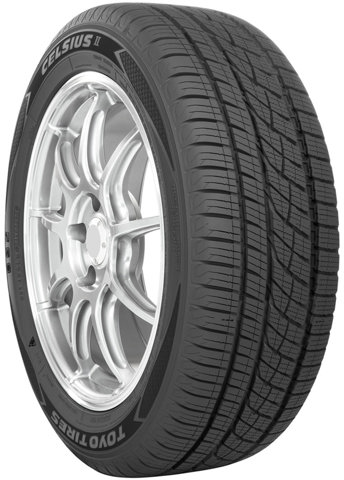
The Celsius II finished last of seven in the test, and we think readers should hear that first. Its snow braking matched the Michelin to within a foot, and it carries a 60,000-mile warranty. Tire Rack lists about 66 sizes from 15 to 22 inches, which means it covers 15-inch wheels where the CrossClimate 2 starts at 16. It holds 4.0 stars across 103 ratings with 93 percent recommending it, the lowest rating of the five.
The Real Catch:
Stopping distance on pavement. It needed about 13 feet more than the Michelin on wet pavement and about 17 feet more on dry, and its rolling resistance (8.55 kg/t) was the second highest of the seven. Choose it because your size is not available in a better tire, or because the 18 to 29 percent saving over the Michelin matters more to you than stopping distance, not because it can match the Michelin.
One More Tire From the Test: Bridgestone WeatherPeak
The WeatherPeak did not make our five because of one number. It matched the Michelin on snow and carries a 70,000-mile warranty in our database, but it needed about 23 feet more than the CrossClimate 2 to stop on dry pavement, the second-longest dry stop of the seven. If dry braking matters to you, that rules it out. If it does not, it is worth a look at the WeatherPeak page on TreadCompass.
How We Checked This
Braking, noise, and rolling-resistance figures are from Tyre Reviews' 2025 all-weather test, and the Vredestein comparison is from its aggregation of eight European tests of the older Quatrac Pro, plus one shared test of the Pro+ from The Tyre Lab. Tyre Reviews lists the Toyo in that test as the Celsius 2; its 225/65R17 size and 102H load index match the US Celsius II, so we use that name. Warranty terms, snowflake status, size counts, and ratings are from each tire's Tire Rack page in October 2026 where we could load it. Tire Rack's pages for the Goodyear and Nokian would not load, so those two rely on our own tire database, a retailer listing, and SimpleTire. Its page for the older Quatrac Pro loaded with only a partial size list, and the 225/65R17 size appears only on the Pro+ page, so the Pro+'s sizes come from Tire Rack's Pro+ page and Apollo, and its prices from TreadCompass's own retailer listings on October 16. The main price comparison uses a price-comparison site's retailer listings for three sizes, with last-checked dates from mid-August to early October 2026, and the Pro+ comparison uses TreadCompass's own listings, which show the CrossClimate 2 well below those earlier prices. We left out UTQG treadwear numbers because we could not source consistent figures for them.
Final Buying Recommendations
If the CrossClimate 2 comes in your size and nothing is wrong with it, nothing here beat it overall in the test we trust most. The reasons to leave are specific:
- For wet roads: Choose the Goodyear Assurance WeatherReady 2 if wet roads worry you more than dry stopping distance or fuel economy.
- For a quiet cabin: Choose the Pirelli Scorpion WeatherActive, the quietest tire in the test.
- For heavy snow regions: Choose the Nokian Remedy WRG5 only if snow and cold dry roads dominate your driving and you accept weaker wet braking.
- For wet grip at a lower price: Choose the Vredestein Quatrac Pro+ if you accept a shorter warranty and weaker snow braking.
- For 15-inch wheels or a tight budget: Choose the Toyo Celsius II or the plain Vredestein Quatrac, knowing the Toyo asks for the biggest braking compromise.